A coastal grandmother home should look like it was gathered over decades, not bought in a single weekend. I've pulled $15 lamps and $40 side tables that read like far more. The fastest, most honest way to get that lived-in soul is thrifting. And Charleston is a wonderful place to do it. Here's how I shop.
What I Look For
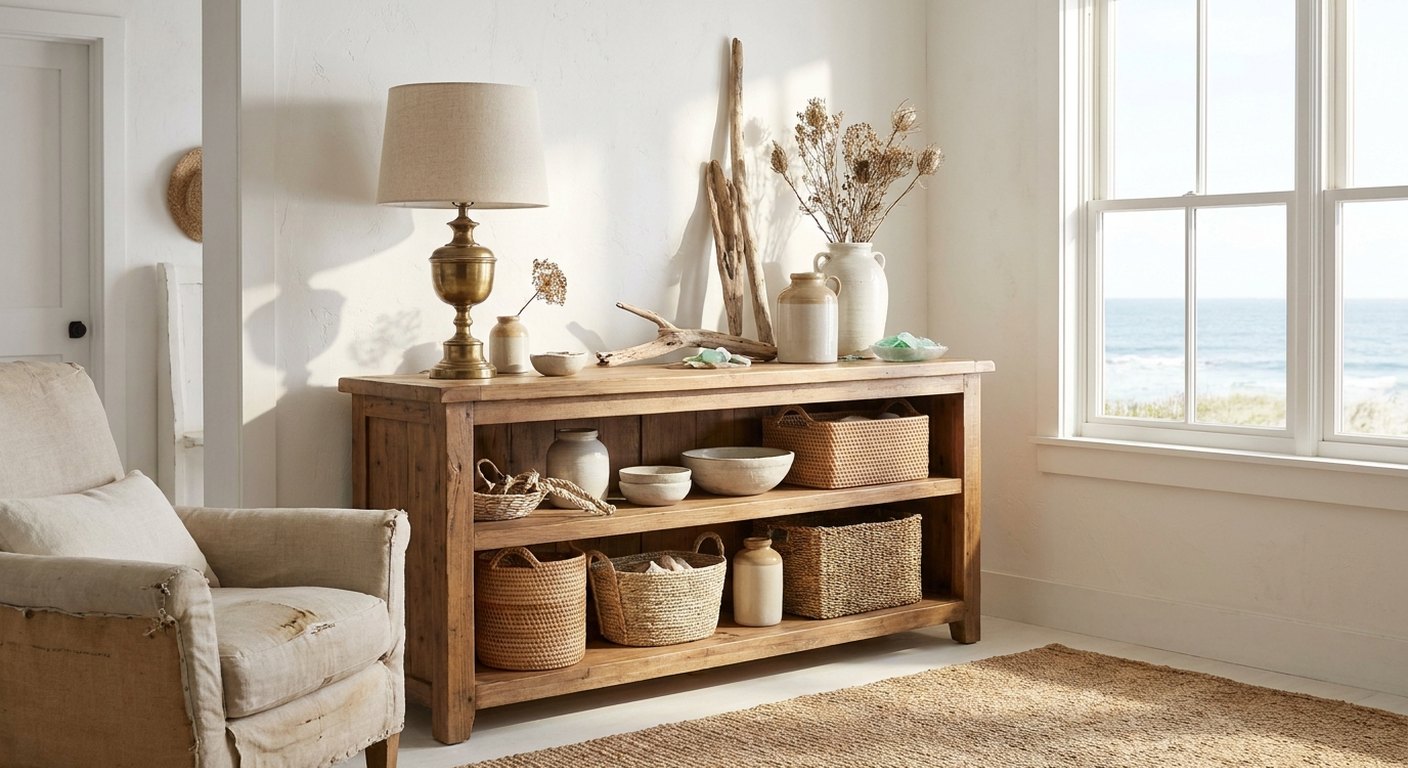
Natural materials and timeless shapes. Real wood furniture, woven baskets, stoneware and ceramic, brass, good textiles. A solid wood cabinet with good bones is worth more than anything new in particle board, and it brings instant character.
What I Skip
Anything trendy or novelty, anything in damaged synthetic materials, and lamps with sketchy wiring I'm not willing to rewire. If a piece doesn't fit the warm, natural palette, I leave it, no matter how good the price.
Lamps Need a Look
Secondhand table lamps are some of the best thrift value out there, but check the cord and socket. Rewiring is cheap and easy, but anything frayed, scorched, or smelling of burning gets left behind.
What to Look For When Thrifting
Successful thrifting is mostly knowing what to grab and what to leave. Look for solid natural materials and timeless shapes: real wood furniture, woven baskets, ceramic and stoneware, brass, and quality textiles. Check wood pieces for sturdy joints, baskets for an intact weave, and lamps for safe, undamaged cords. Favor simple, classic forms over trendy or novelty items. The best finds are well-made pieces in natural materials that just need a clean or a small refresh to look intentional. A heavy, well-jointed wood cabinet at a thrift price beats anything new in particle board.
Is Secondhand Lighting Safe?
Thrifted lamps are some of the best value out there, but inspect the wiring before you trust one. Check that the cord isn't frayed or cracked, the plug is intact, and the socket isn't scorched or damaged. Rewiring a lamp is inexpensive and simple if you're handy, or cheap through a repair shop. Always test with a new bulb before relying on it, and walk away from anything that flickers, buzzes, smells of burning, or shows heat damage. A good table lamp base is worth rewiring; a sketchy one isn't worth the risk.
Where to Look in Charleston
Charleston rewards patient thrifting, estate sales in the older neighborhoods, consignment shops, and Marketplace listings all turn up genuine character pieces. I go often and buy rarely, which is the right ratio: the magic of a gathered-over-time home is that the pieces actually accumulated over time. Set a clear palette in your head before you go so you're not seduced by a bargain that doesn't fit. And measure your spaces so you know what will actually work when you find it.
Refreshing a Find
Half the fun is the small refresh that makes a find feel intentional. A coat of spray paint transforms a dated metal fixture; a new fabric cord and a fresh shade revive a tired lamp; a wipe-down and a little wood oil brings a dull wood piece back to life. None of it takes much skill, and the result is a one-of-a-kind piece with patina you simply can't buy new. That blend of old character and a light refresh is the soul of a coastal grandmother home.
Budgeting for Thrifted Finds
Thrifting rewards patience over splurging. Set a loose budget and a clear palette before you go, so a bargain that doesn't fit doesn't tempt you. The best value is solid wood furniture, lamps worth rewiring, and natural-material baskets and ceramics, pieces that just need a clean or a refresh. Skip anything structurally tired; a low price isn't a deal if the piece won't last.
Mistakes Thrifters Make
The common ones: buying off-palette because it's cheap, then never using it; ignoring damaged lamp wiring that's unsafe; and skipping measurements so a find doesn't fit the space. Carry your palette and your room dimensions in your head, inspect cords and joints, and be willing to walk away. A disciplined no is what makes the eventual yes feel collected rather than cluttered.
Refreshing What You Find
Half the magic is the small revival: spray paint on a dated metal fixture or piece, a new fabric cord and shade on a tired lamp, a wipe-down and a little oil on dull wood. None takes much skill, and the result is a one-of-a-kind piece with patina you can't buy new. That blend of old character and a light refresh is the soul of a coastal grandmother home.
Making It Cohere
The trick to mixing old and new without chaos is a consistent palette. If everything lives in warm neutrals and natural textures, a thrifted brass lamp sits happily beside a new rattan chair. The variety reads as gathered-over-time, which is exactly the coastal grandmother goal.
Shop this post: wood storage cabinets and table lamps for the living room