When I first saw a planter light, I assumed it was a gimmick. The fixture cost about $120 and earns its place every single morning. The kind of clever-for-clever's-sake object that looks good in a catalog and disappoints in person. I was wrong. The one in my kitchen window has become my favorite thing in the room.
Plant and Light, Together
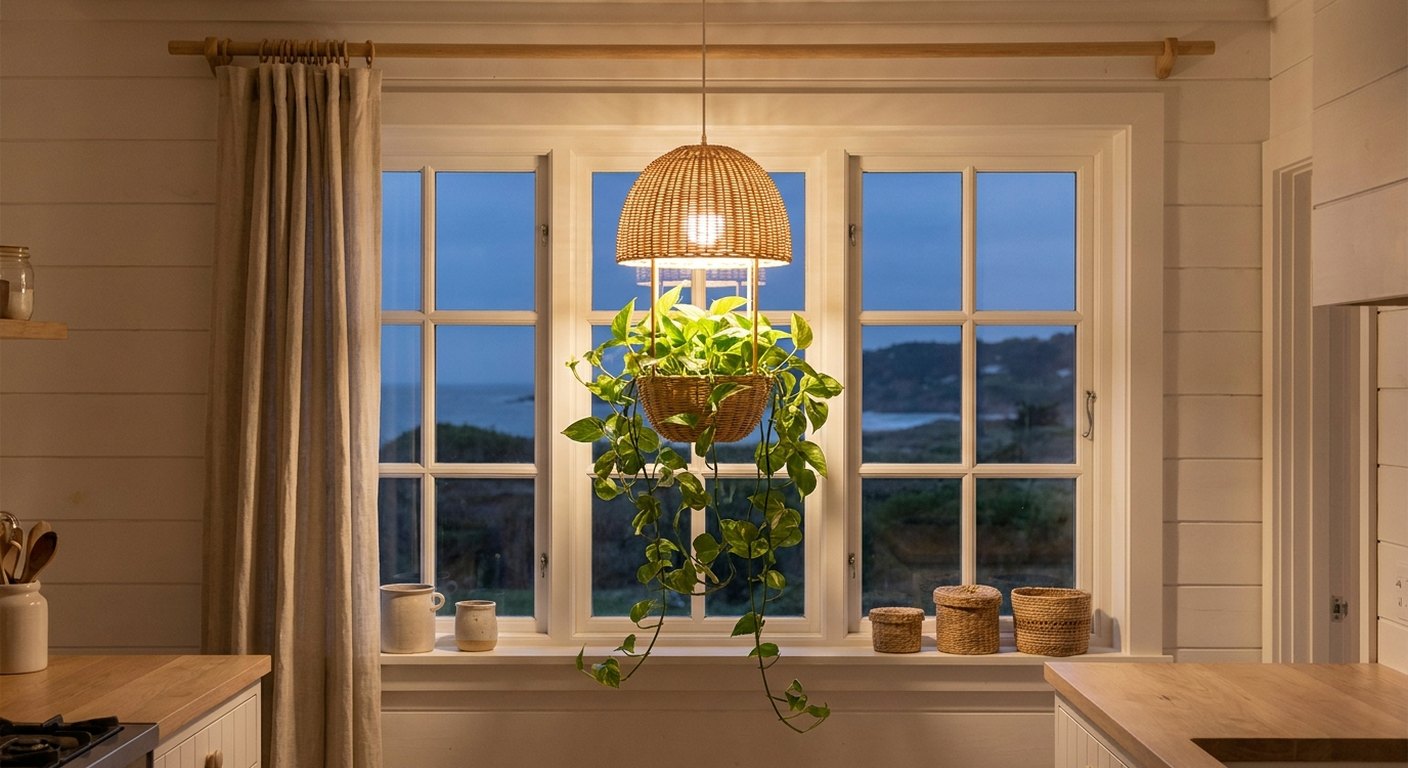
A planter light holds a living plant and casts warm light at the same time. In my kitchen, a trailing pothos spills out of one mounted near the window, glowing softly in the evening. It's a little pocket of life and light in one.
Why It's So Coastal
Coastal grandmother style is all about bringing the outside in. A planter light does that literally, greenery and warm glow in a single, sculptural fixture. The Kelda planter sconce is a beautiful version if you want it on a wall instead of a sill.
Keep It Easy
I keep a forgiving trailing plant in it, pothos asks for almost nothing and drapes beautifully. I use a small liner so watering stays away from the fixture, and I picked a window with enough daylight to keep the plant happy.
What a Planter Light Actually Is
For anyone who hasn't seen one, a planter light is exactly what it sounds like: a fixture that combines a light source with a built-in planter or pot. So one piece both holds a living plant and casts light. They come as pendants, sconces, and standing fixtures. The effect is a small glowing pocket of greenery, a living focal point that does the practical job of a light while bringing the bring-the-outside-in spirit a coastal home is built on. It's the rare decor object that's useful and a little magical at once.
Choosing the Right Plant
The trick to a happy planter light is a forgiving plant. Trailing, low-light-tolerant species are the easiest match, pothos, philodendron, and ivy all drape beautifully and tolerate less-than-ideal conditions. Choose the plant for the room's actual light level, not the fixture's bulb, which provides ambiance rather than growing light. Use a pot liner or water carefully so moisture stays clear of the electrical parts. And pick a plant whose mature size suits the fixture so it doesn't outgrow its home in a season.
Where to Put One
Planter lights shine wherever you'd love both greenery and a warm glow: a kitchen window or corner, a sunroom, an entry, beside a reading chair. Choose a spot with enough natural light to keep the plant happy, since the bulb is for mood, not photosynthesis. The Kelda planter sconce is a lovely wall-mounted option if a sill or a pendant spot isn't available, and the wider planter light range covers pendants and standing styles too.
Caring for It
Upkeep is the same as any houseplant plus a little electrical caution. Water the plant on its own schedule, keep water away from the socket and cord, and dust the fixture as you would any light. Trim trailing growth so it drapes the way you want rather than tangling near the bulb. With a forgiving plant and a sensible watering habit, a planter light is no more demanding than a pothos on a shelf, it just glows.
What a Planter Light Costs
Planter lights are a modest buy for how much character they add, and they replace two purchases, a light and a planter, with one. The fixture plus a forgiving plant and a small liner is the whole cost. For a unique, living focal point that does a real job, it's one of the more charming-per-dollar pieces you can add to a coastal kitchen or sunroom.
Common Planter-Light Mistakes
The errors: choosing a fussy plant that resents the spot and dies; watering carelessly so moisture reaches the electrical parts; and placing it somewhere too dark for the plant to survive on its bulb alone. Pick a forgiving trailing plant, use a liner and water gently, and choose a spot with enough natural light to keep the greenery happy.
Styling a Planter Light
Let the plant trail and soften the fixture rather than crowding it, and choose greenery whose mature size suits the piece. A wall-mounted planter sconce works where a sill or pendant spot isn't available. Keep the surrounding surface clear so the living glow is the star. It's the kind of detail that makes a window feel like a tiny garden.
The Little Joy of It
There's something quietly delightful about a light that's also alive. It softens the whole kitchen and makes the window feel like a tiny garden. Of everything in this house, it's the piece that most makes me smile when it clicks on at dusk.
Shop this post: planter lights and the Kelda planter light sconce