Rattan is the backbone of a coastal home. Good rattan runs anywhere from $80 for a side table to $600 for a statement chair. It brings warmth, texture, and that breezy, lived-in ease without any effort. Over the years some natural pieces have earned permanent spots in our house. Here are five I'd buy again without a second thought.
1. A Rattan Nightstand
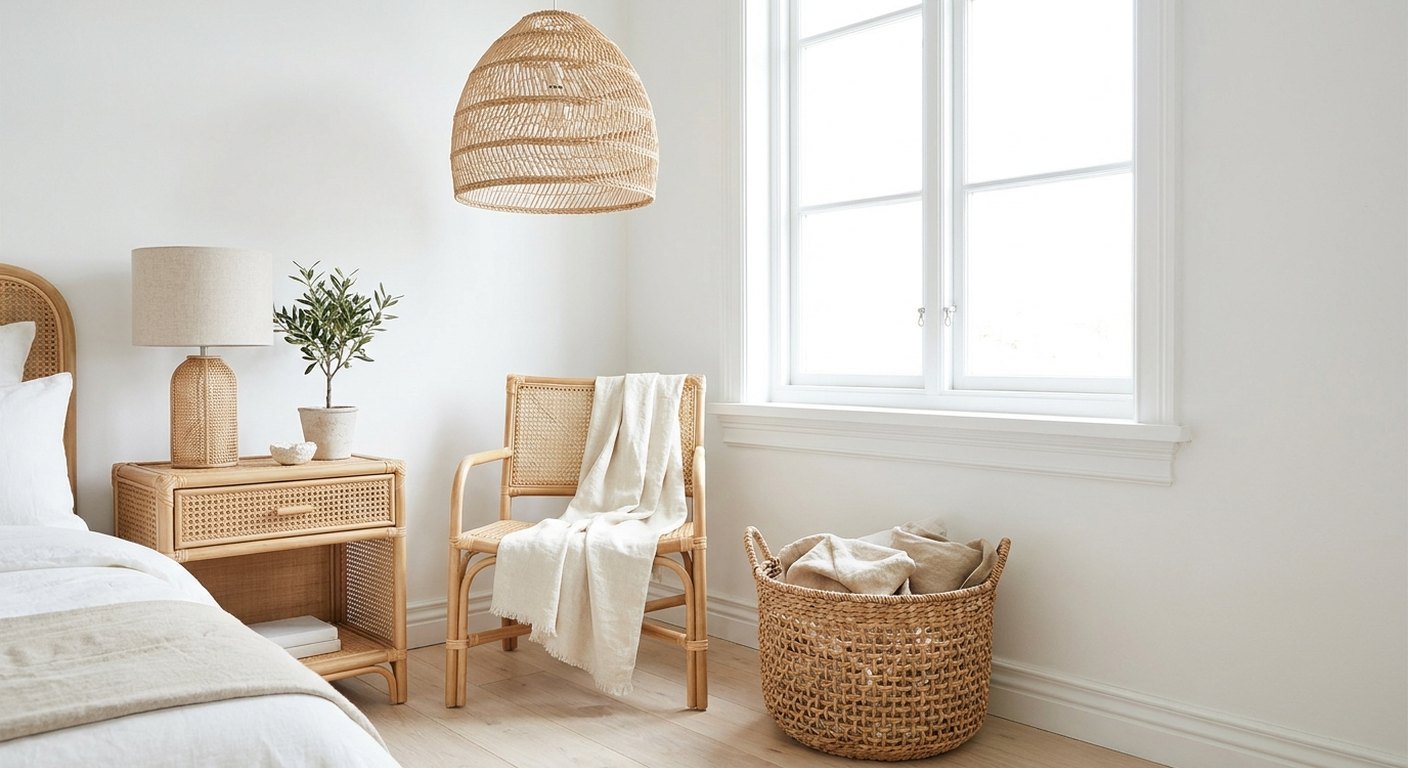
The Eken rattan nightstand sits beside our bed and does double duty as bedside storage and texture. Lightweight, characterful, and exactly the right warmth against linen bedding.
2. A Woven Pendant
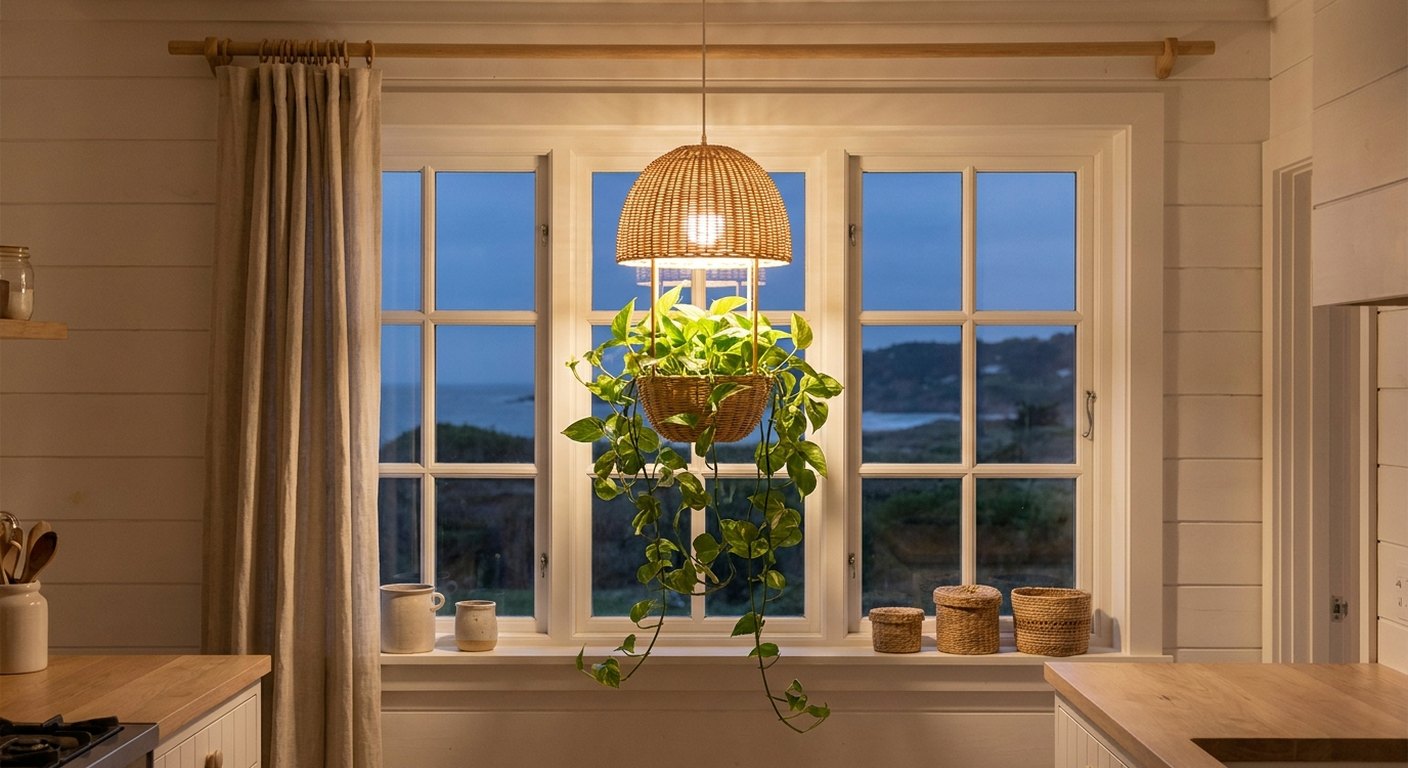
A natural wood and woven pendant over the island casts the most beautiful textured shadows. It's the piece guests comment on most, and it ties the whole kitchen to the coastal palette.
3. Cane-Back Dining Chairs
Cane chairs are light, comfortable, and forgiving. They mix with almost anything, and the open weave keeps a dining room feeling airy instead of heavy.
4. A Big Woven Basket
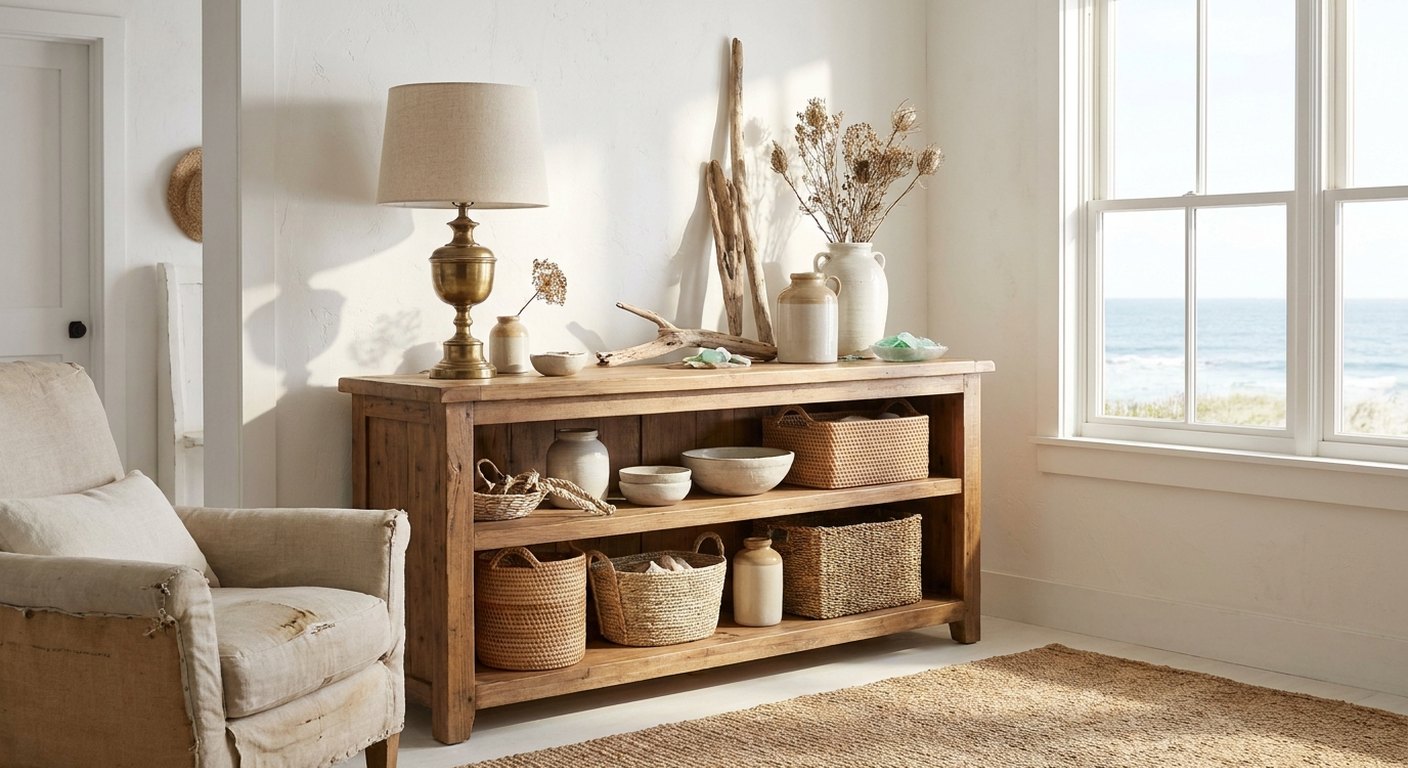
For blankets, for toys, for the inevitable overflow. A generous woven basket is the most useful piece of "decor" I own, texture and storage in one.
5. A Rattan Headboard
Nothing makes a bedroom feel coastal faster than a woven headboard. It's the natural texture you wake up to. The trick with all of this, though, is balance, mix rattan with smooth surfaces so the weave stands out instead of taking over.
Is Rattan Actually Durable?
People assume rattan is delicate, but quality natural rattan used indoors is surprisingly tough and lasts years with basic care. It's lightweight yet sturdy, and the minor wear it picks up tends to read as character rather than damage. The caveats are real but simple: keep natural rattan out of constant moisture and prolonged harsh sun, which can make it brittle or faded over time. And don't leave indoor pieces fully outdoors unless they're rated for it. Treated well, a good rattan piece outlives plenty of trendier furniture.
How to Clean and Care for It
Care is low-effort. Dust regularly with a soft brush or a vacuum brush attachment so grime doesn't settle into the weave. For a deeper clean, wipe with a barely damp cloth and mild soapy water, then dry thoroughly, never let rattan sit wet. Keep it out of prolonged direct sunlight to prevent fading, and wipe spills promptly so they don't stain. That's the whole maintenance routine, which is part of why these pieces stay in rotation for years.
How Much Rattan Is Too Much
The one way to overdo rattan is to make everything woven. If every piece in a room is the same texture, the space goes one-note and busy. The fix is contrast: pair rattan with smooth surfaces, painted wood, linen, ceramic, glass. So each texture reads. A rattan light, a woven chair, and a basket or two is plenty in most rooms. Let some surfaces stay smooth so the weave has something to play against.
What Good Rattan Costs
Rattan spans a wide price range, and you don't need the top of it. A rattan nightstand or a woven basket is an affordable entry; a statement chair or a headboard is the bigger spend. Thrift and estate sales turn up genuine rattan cheaply, and a quick clean revives most of it. Buy solid, well-woven pieces over flimsy ones, quality rattan lasts years and the cheap stuff sags fast.
Mistakes With Rattan
The pitfalls: making everything woven until the room feels one-note; leaving natural rattan in damp or harsh-sun spots where it grows brittle or fades; and skipping maintenance until grime sets into the weave. Mix rattan with smooth surfaces, keep it indoors and out of constant sun and moisture, and dust it regularly. Treated well, it only gets more characterful.
Pairing Rattan With Other Materials
Rattan sings against contrast. Set a woven pendant against cool marble, a cane chair against a linen sofa, a rattan basket against painted wood. The interplay of textured and smooth is what keeps a coastal room from reading flat. Think of rattan as a seasoning, a few well-placed pieces among smoother surfaces, not the whole dish.
Where to Start if You Buy One Thing
If you're only adding one rattan piece, make it a woven pendant or a single statement chair. Both bring a lot of coastal texture for one purchase and don't require committing the whole room. A rattan nightstand is another low-risk entry point: small, useful, and easy to move if your taste shifts. Start small, see how the texture feels in your space, and build from there.
Shop this post: the Eken rattan nightstand and wood pendant lights