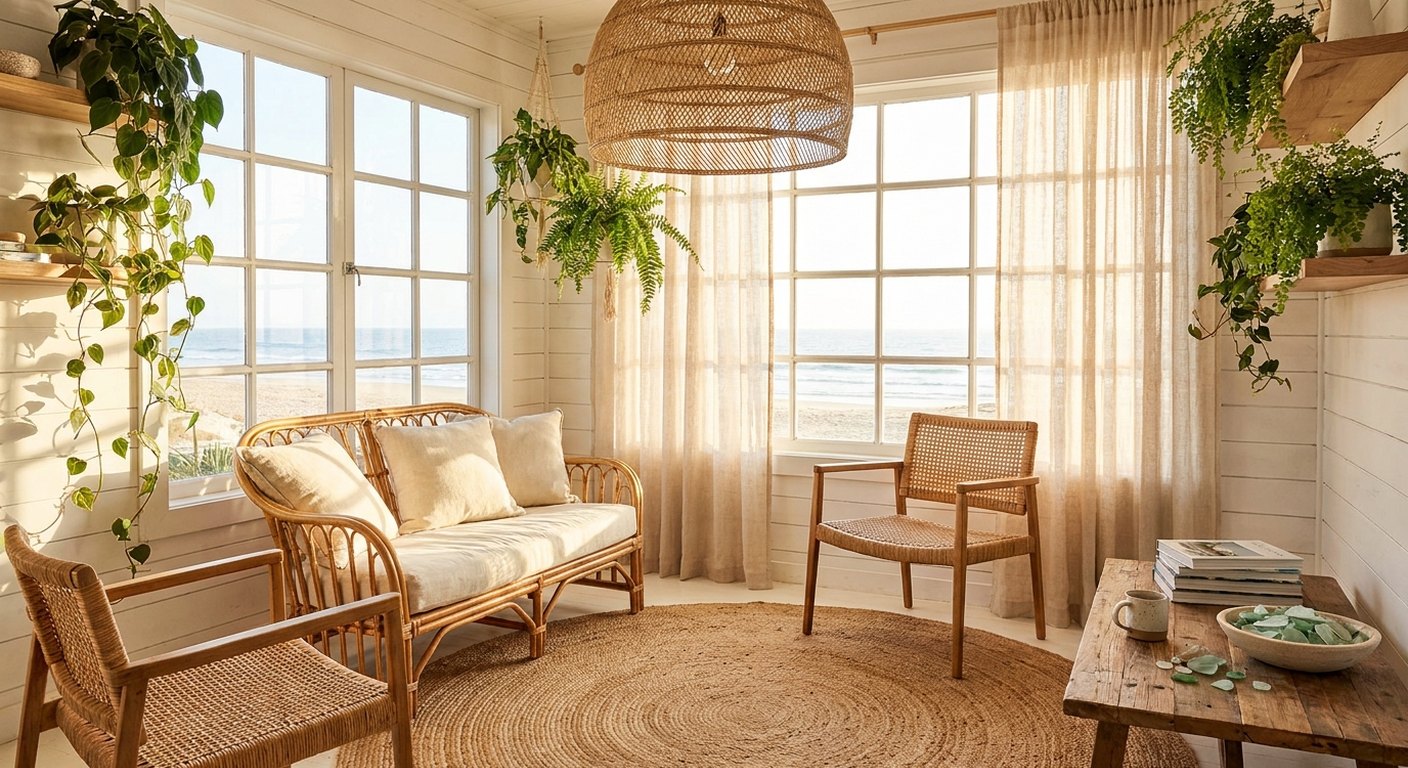
When we bought the house, the sunroom was a sad little add-on with vinyl blinds, a wicker set from another era. The whole sunroom makeover came in around $3,500. And a ceiling fan with a light kit that buzzed. It got lovely morning light and then sat empty all day because nobody wanted to be in it. One coastal makeover later, it's the room we fight over.
Rattan and Cane, Naturally
I furnished it almost entirely in natural materials, a rattan loveseat, two cane chairs, a low teak table. In a room flooded with light, these textures glow. They also feel right for Charleston: breezy, relaxed, a little porch-like.
Soft Textiles That Can Take Sun
Washed linen cushions and a jute rug ground the space. I keep the linen in pale warm tones because deep colors fade unevenly in a sun-drenched room. Light colors just get softer and lovelier over time.
A Planter Light for Living Texture
My favorite detail is a planter light in the corner. It holds a trailing pothos and casts a warm glow at the same time. Plant and light in one feels exactly like the biophilic, bring-the-outside-in spirit of a coastal room.
Choosing Furniture That Survives the Light
A sunroom is a beautiful, punishing environment for furniture, hours of direct sun, temperature swings, and humidity all conspire against the wrong materials. Natural fibers like rattan, cane, and teak handle it gracefully and only get more characterful with age, which is why they're the backbone of a coastal sunroom. What I'd avoid: heavy upholstery in deep colors that fade unevenly, anything veneered that can delaminate in heat, and synthetic fabrics that look tired fast in strong light. We chose washable linen and performance-fabric cushions in pale tones precisely because they soften rather than degrade as the sun works on them.
Keep the pieces low and open so the room stays airy and the view stays the focus. A leggy rattan loveseat and cane chairs let light pass through them; a big solid sofa would block the light and shrink the room.
Managing the Midday Sun
The flip side of all that glorious light is glare and heat, and the fix is layering soft shading rather than blacking the room out. Light-filtering linen curtains or woven shades cut the harshest midday sun while keeping the view and the brightness, and pale, light-reflecting colors keep the room from absorbing heat. Plants help more than people expect, a sunroom full of greenery feels cooler and more alive. And a fan keeps the air moving on the hottest afternoons. The goal is to tame the sun, not banish it.
A Planter Light for Living Texture
My favorite detail in the room is a planter light in the corner that holds a trailing pothos and casts a warm glow at the same time. Plant and light in one fixture is exactly the bring-the-outside-in spirit a sunroom is built for, and it earns its spot by doing two jobs at once. I keep a forgiving, low-light-tolerant plant in it and use a small liner so watering stays clear of the electrical parts.
Layering Light for a Room With No Walls
A sunroom is mostly glass, which means almost no wall space for sconces. So the light has to come from above and from the floor. I lean on the corner planter light, a soft pendant overhead, and a low floor lamp tucked beside the loveseat. Three warm sources at different heights give the room the same layered glow as any other coastal space, just solved around the architecture. For more on building those layers in a glass-heavy room, the same principles apply as in any pendant-lit space: warm bulbs, multiple sources, a dimmer on the main fixture.
What I'd Do Differently
I'd add the curtains earlier. We lived with raw glare for a full summer before hanging the linen panels, and the room became usable hours earlier in the day once they went up. I'd also choose the floor lamp with a weighted base from the start; our first one was too light and tipped in the breeze from the open windows, which is a very sunroom problem to have.
What the Sunroom Makeover Cost
The room was transformed mostly with secondhand and natural pieces rather than a renovation. The rattan loveseat and cane chairs were the main spend; washable linen cushions, a jute rug, and the corner planter light filled it out affordably. Linen curtains were the last and most impactful add. No structural work, no built-ins, just natural materials, soft shading, and warm evening light turning an unused add-on into the most-used room in the house.
Mistakes That Make a Sunroom Unusable
Sunrooms fail in two predictable ways. People furnish them in materials that fade and warp in the sun and humidity, then wonder why everything looks tired in a season. And they leave the evening unsolved, so the glass turns to black mirrors at night and the room empties out after dark. Natural materials and a warm, dimmable evening light fix both.
Seasonal Tweaks Through the Year
A sunroom rewards small seasonal shifts. In summer the linen curtains and a fan do the heavy lifting against heat and glare; in cooler months I pull the shading back to let the low sun in and add a warm throw and a little extra evening light. The bones stay the same, rattan, linen, plants. And the room flexes with the light through the year.
Evening Light That Doesn't Glare
The trick with sunrooms is the evening. All that glass turns into black mirrors at night and a single overhead light bounces back at you. I added a soft pendant on a dimmer, and now the room glows warmly after dark instead of glaring. It's the difference between a daytime room and an all-day room.
Shop this post: planter lights and pendant lights