People ask me what makes a pendant look coastal, as if there's a secret category. There isn't. But there are real patterns in shape, material, and finish that separate a pendant that belongs in a sun-washed room from one that fights it. Here's what I look for.
Material First
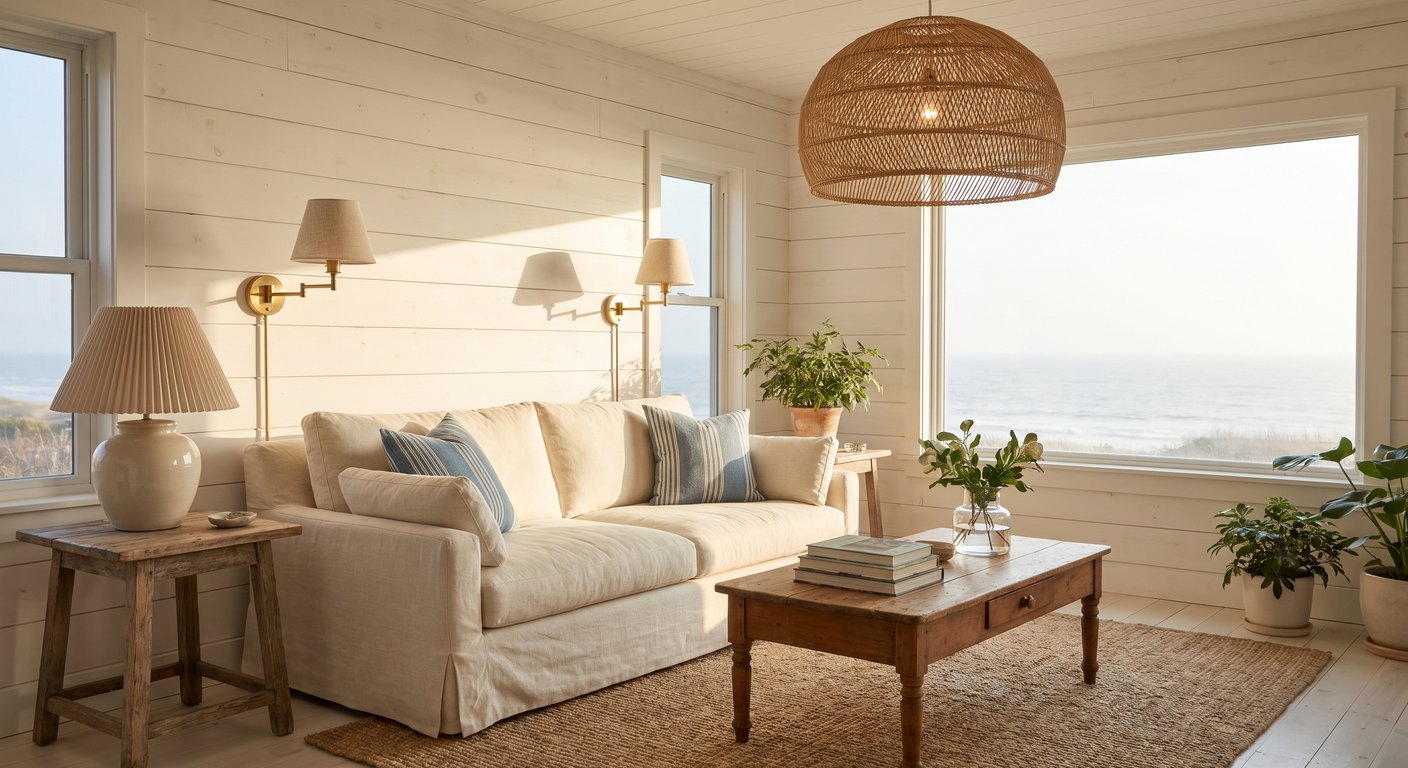
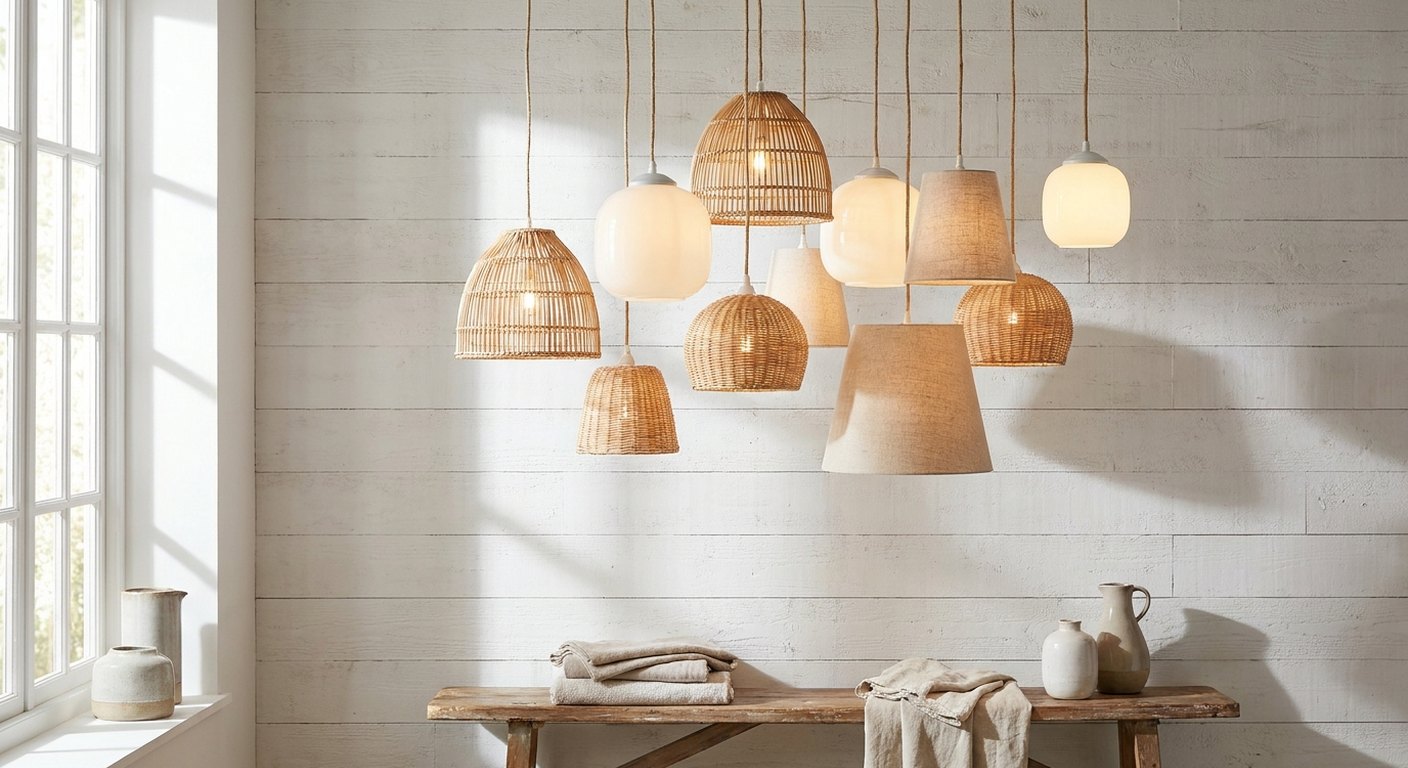
Coastal pendants are made of natural or soft materials: rattan, cane, woven seagrass, light wood, and opal or seeded glass. These catch light gently and add texture. Heavy dark metal, industrial cages, and anything ornate pulls a room away from coastal and toward farmhouse or industrial.
Shape: Simple and Nordic
The best coastal pendants have clean, simple silhouettes, a soft dome, a round globe, an open woven bell. Nordic restraint is your friend here. The shape should feel quiet, not decorative. Browse the full range of pendant lights and notice how the simplest shapes are the most timeless.
Where Each One Works
Natural-material pendants belong over islands, in sunrooms, and in entries where texture is welcome. Soft glass pendants belong over dining tables and in bedrooms where you want a cleaner glow and a bit more output. Match the material to the job and you'll never go wrong.
Sizing a Pendant for Its Spot
The right coastal pendant in the wrong size still looks wrong, so sizing comes before style. Over a kitchen island, follow one pendant per two feet of island length, and size each shade to look proportional to the island rather than lost on it. Over a dining table, a single fixture roughly half to two-thirds the table's width usually looks best. In an entry or a corner, one well-chosen pendant is plenty. The most common mistake across all of these is going too small, when you're between two sizes, size up. You can see how the proportions play out across the pendant range.
Light Output vs. Atmosphere
Different coastal shades give very different amounts of light, and matching that to the job is half the battle. Open-weave rattan and dense fabric cast soft, textured, ambient light, wonderful for mood, weaker for tasks. Opal and seeded glass give a cleaner, brighter, more even glow. So a woven pendant over an island wants under-cabinet task light to back it up, while a glass pendant over a dining table can largely carry the room on its own. Decide whether a spot needs light or atmosphere, and let that steer the shade.
Hanging Height by Room
Coastal or not, height rules are consistent. Over a dining table, 30 to 34 inches above the surface. Over a kitchen island, 30 to 36 inches above the counter. In a walkway or entry, at least seven feet of clearance underneath. Centered in a room rather than over furniture, keep it high and treat it as ambient light. Getting the height right does as much for how a pendant reads as choosing the fixture itself.
Plug-In and Swag Options for Tricky Spots
Not every spot you'd love a pendant has a junction box, and that's fine, plug-in and swag pendants hang from a hook and plug into an outlet, no electrician required. They're perfect for renters, older homes, and any spot where the wiring isn't where you wish it were. A glass swag over a reading chair or a bedside corner gives you the coastal pendant look with none of the rewiring.
Coastal Pendants Room by Room
Different rooms call for different coastal pendants. Over a kitchen island, a woven or wood pendant adds texture and warmth. Over a dining table, a soft glass globe gives a clean, even glow. In an entry, a lantern or a compact woven shade welcomes. In a bedroom, a linen or opal shade keeps things soft. Match the material to the room's job and the whole house reads as one coherent collection.
Mistakes When Choosing a Pendant
The frequent missteps: buying too small so the fixture looks lost; choosing an ornate or glossy finish that fights the calm coastal palette; and forgetting to check whether the spot can carry the light the fixture gives. Size up when unsure, favor quiet natural finishes, and pair a low-output woven shade with backup task light. Get those right and almost any simple pendant reads coastal.
Renter and Old-House Options
No junction box where you want a pendant? A swag or plug-in pendant hangs from a hook and plugs into an outlet, perfect for renters and older homes. It gives the coastal pendant look over a reading chair, a bedside corner, or a small dining table with no electrician and no permanent change. The look is identical; only the power source differs.
The Finish Test
If you're choosing between finishes, pick the one that recedes. Coastal pendants shouldn't shout. A natural rattan or a soft white will always feel more coastal than a high-shine brass or a glossy black. When in doubt, choose the quieter option.
Shop this post: pendant lights and glass pendant lights