The most common lighting mistake I see is relying on one ceiling fixture to do everything. A single overhead light flattens a room. It kills shadow, erases texture, and somehow manages to feel both harsh and dim at once. The secret to a glowing coastal room is layering three kinds of light.
Layer One: Ambient
This is your general light, usually a pendant or ceiling fixture. It fills the room, but it should never be the only thing working. Think of it as the base coat, not the finished wall.
Layer Two: Task
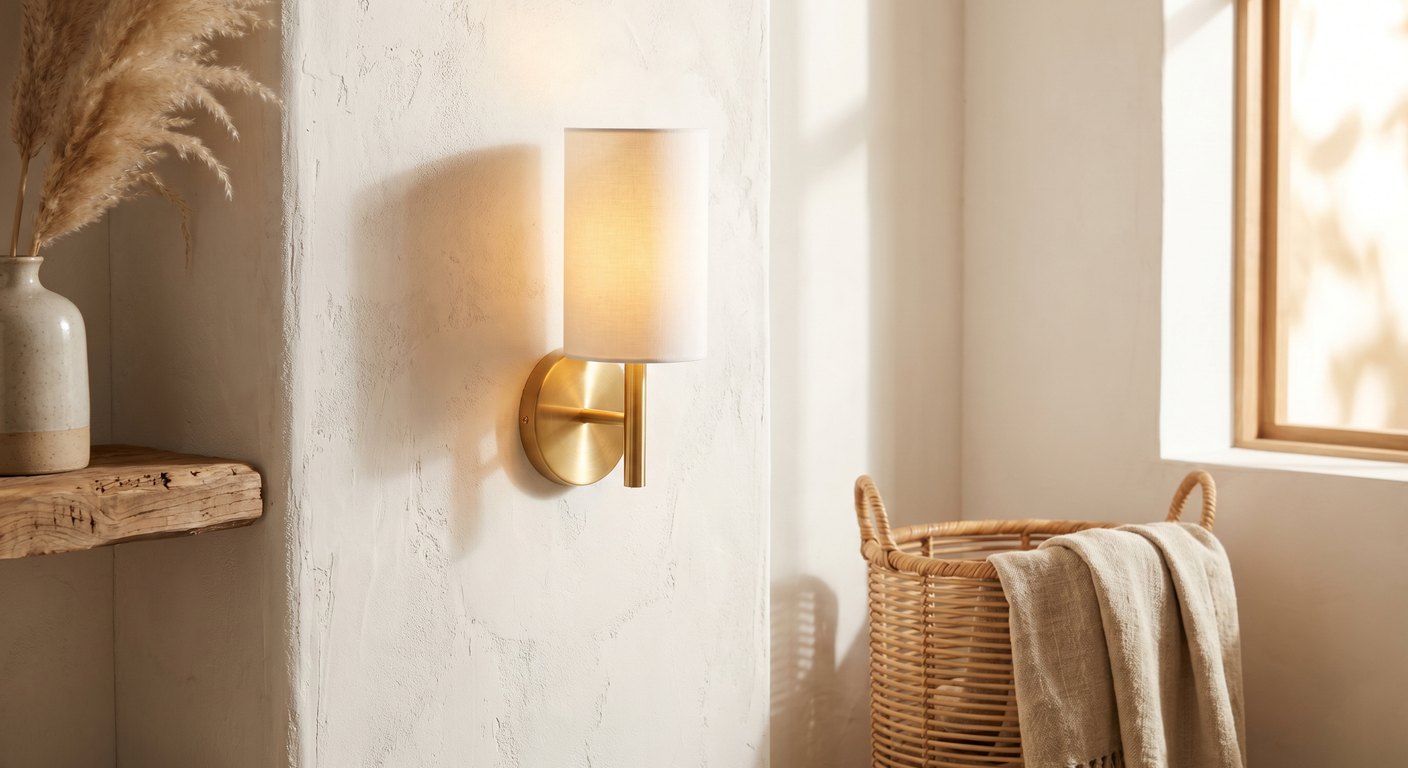
Light for doing things: reading, chopping, working. This is where wall sconces and focused lamps come in. Task light is directional and bright where you need it, dark where you don't.
Layer Three: Accent
This is the mood layer, a table lamp glowing in a corner, a sconce washing a textured wall. Accent light is what makes a room feel finished and warm in the evening, the lamplight glow that says someone lives here and loves it.
Why One Overhead Light Fails
It's worth understanding why a single ceiling fixture makes a room feel flat, because once you see it you can't unsee it. Top-down light erases shadow, and shadow is what gives a room depth and texture. With one overhead source, your linen sofa, your rattan chair, your whitewashed walls all flatten into the same plane, and the room reads as both harsh and oddly dim. Adding light at lower heights restores the gradients. The soft fall-off across a wall, the glow pooling on a side table. That make a space feel three-dimensional and alive.
How Many Sources, and How Bright
For a main room, aim for three to five light sources at different heights, and resist the urge to make any one of them blindingly bright. A 200-to-300-square-foot living room is comfortable around 1,500 to 3,000 lumens total, but spread across several sources rather than concentrated in one. A floor lamp at roughly 1,000 lumens, two sconces at 400 each, and a dimmed overhead gives you depth, flexibility, and several separate moods from the same set of fixtures.
Mixing Heights on Purpose
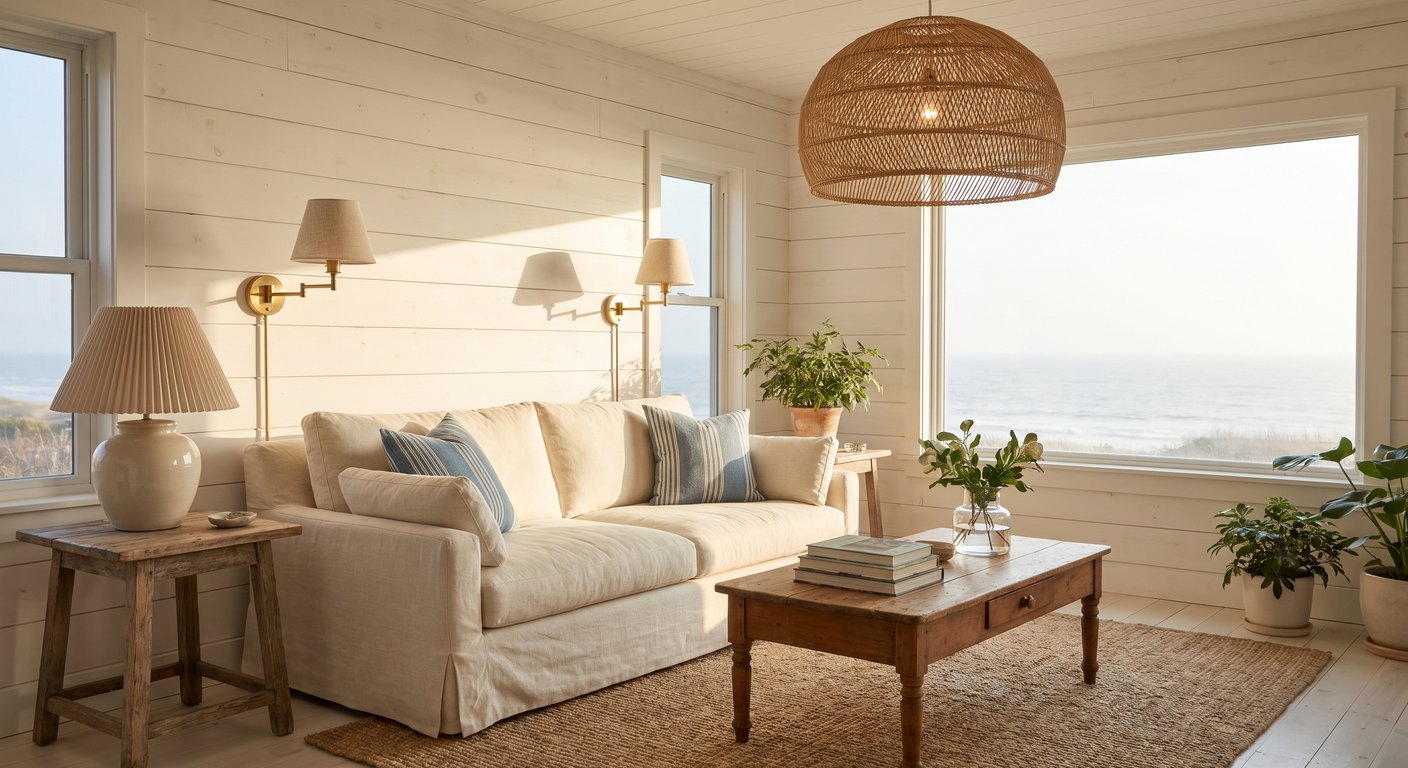
The layers work because they sit at different heights: overhead (ceiling), eye level (sconces), and tabletop (lamps). Each height does a different job, ceiling light for general fill, eye-level light for warmth and flattery, low light for intimacy and reading. When you're planning a room, literally think in those three tiers and make sure each is represented. A table lamp glowing low in the evening does something no ceiling fixture can.
Layering a Room With No Overhead Fixture
Plenty of older homes, ours included in a couple of rooms, have living spaces with no ceiling box at all. You can build all three layers from plug-in sources: a floor lamp for ambient, a plug-in sconce for eye-level warmth, and a table lamp for accent. Put a couple of them on a smart plug so they come on together at dusk. And the room is fully, beautifully layered without an electrician ever setting foot in it.
A Layering Plan You Can Copy
For almost any main room, start with this recipe: one soft overhead or pendant for ambient fill, two sconces at eye level for warmth, and one or two lamps for accent and reading. Put the overhead on a dimmer, keep every bulb at warm 2700K, and you have a room with three or four moods built in. Copy the structure and swap the specific fixtures to suit the space.
Common Layering Mistakes
The errors are predictable: stopping at the overhead and calling it done; lighting everything to the same brightness so there's no depth; and mixing bulb temperatures so one source looks 'off.' Build at least three layers at different heights, vary the brightness so some pools are dimmer than others. And keep every bulb the same warm temperature. Depth comes from contrast, not from more total light.
Layering Without Rewiring
You can build every layer from plug-in sources in a room with no ceiling box. A floor lamp covers ambient, a plug-in sconce adds eye-level warmth, and a table lamp handles accent. Put a couple on a smart plug so they come on together at dusk. And the room is fully layered with no electrician, proof that layering is about placement and warmth, not new wiring.
Put It Together
A whitewashed living room with just a pendant feels cold. Add two sconces at eye level and a lamp in the dark corner, all on warm bulbs, and the same room glows with dimension. Aim for three to five sources at different heights in any main room. Layered light is the whole game.
Shop this post: wall sconces and table lamps for the living room