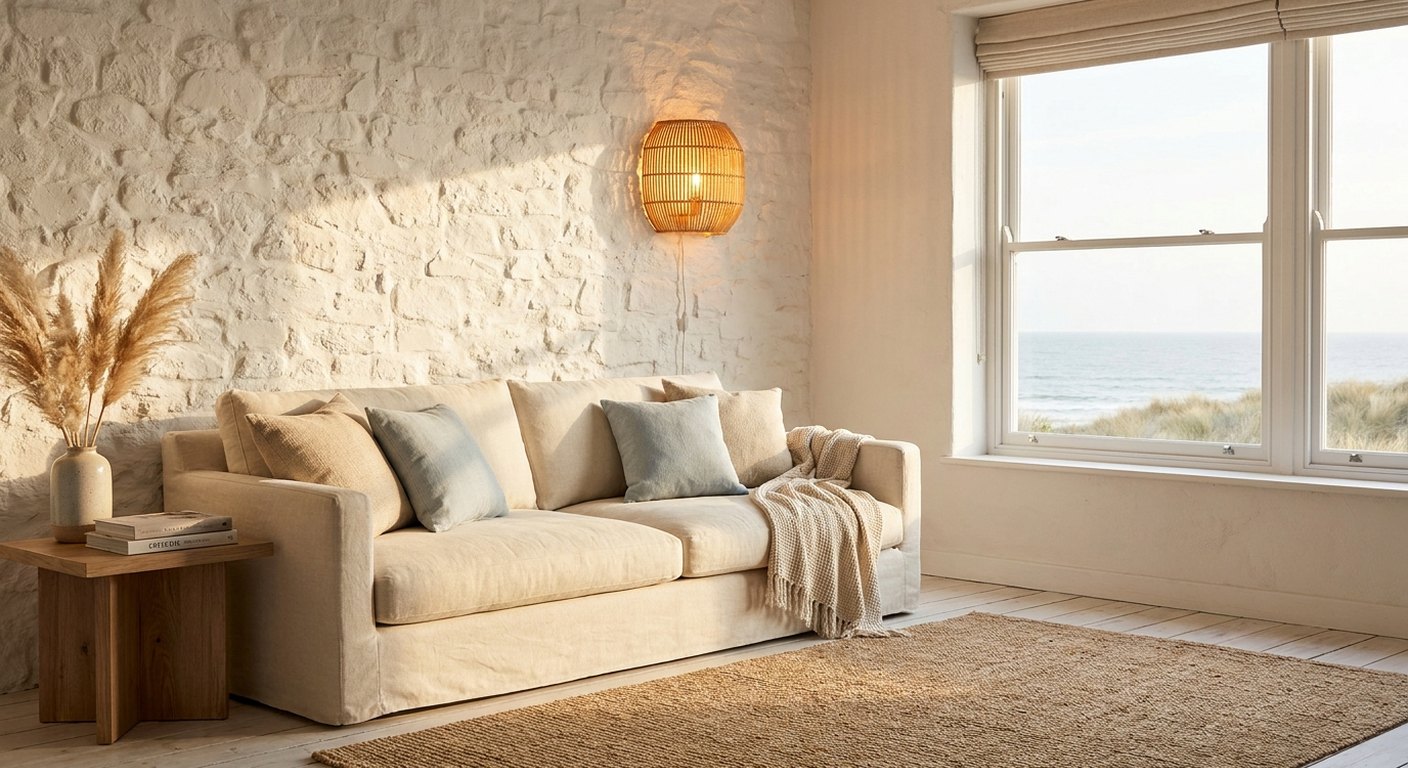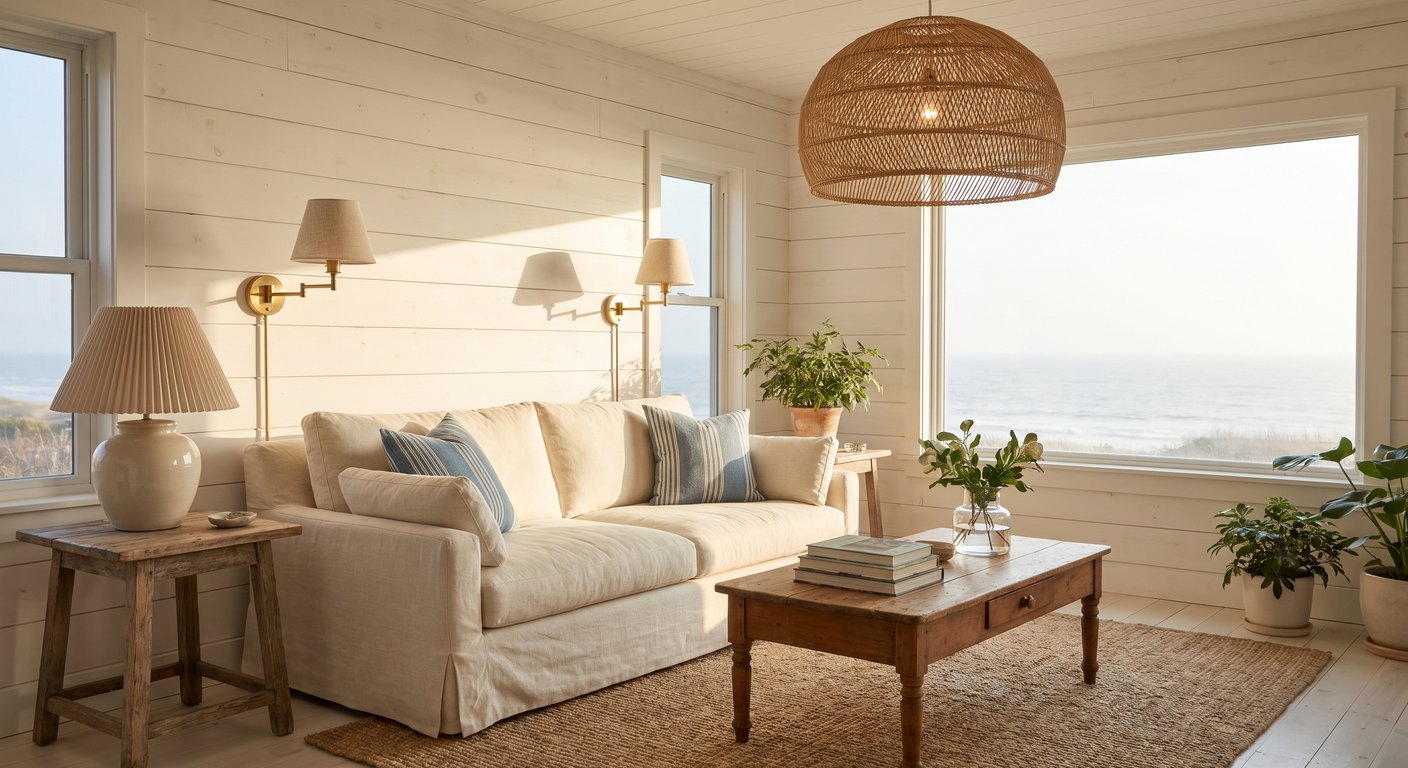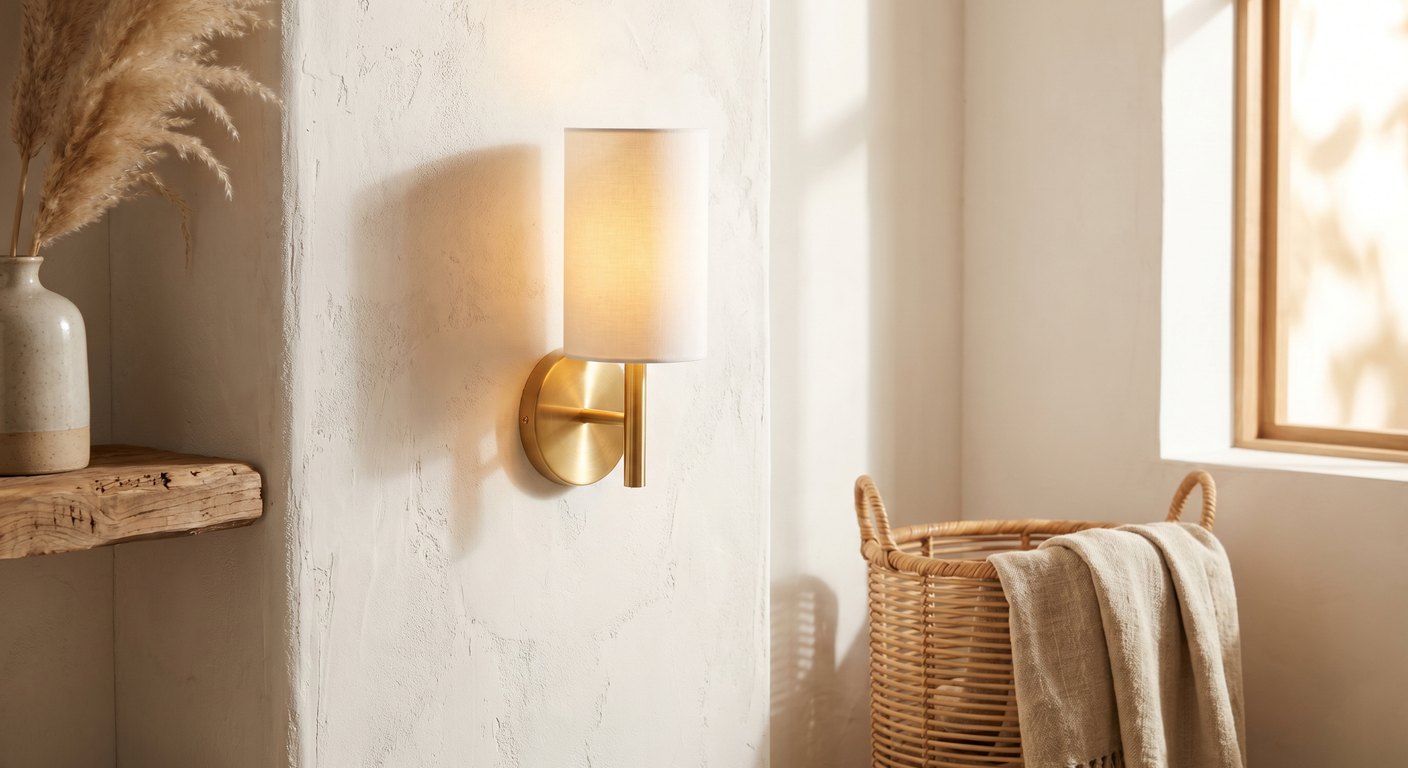
If I ran the world, every home would have more wall sconces. They're the most underused fixture out there, and eye-level light does more to transform a room than any ceiling fixture I've ever hung. Let me make the case.
Eye-Level Light Is Flattering Light
Overhead light casts shadows down, under your eyes, your nose, your chin. Sconces put light at eye level, where it fills those shadows in. It's the same reason candlelight and lamplight have always made people look their best. A room lit only from above feels harsh; a room with sconces feels soft.
They Save Space
A sconce frees up the nightstand, the side table, the floor. In small rooms. And coastal rooms love to feel airy. That reclaimed surface is gold. No lamp base, no cord pooling, just clean light on the wall.
Where I Use Them
Beside the bed for reading. Flanking the bathroom mirror for shadow-free light. Along the hallway for warmth. Beside the reading chair. On either side of the mantel. Anywhere I want warm light without surrendering a surface, a sconce goes up.
Room-by-Room: Where Sconces Earn Their Keep
Sconces aren't a one-room fixture, which is the whole point. Beside the bed they replace cluttered nightstand lamps and give better reading light. Flanking a bathroom mirror they erase the shadows an overhead vanity bar carves into a face. Along a hallway they add warmth and rhythm to a space that's usually an afterthought. Beside a reading chair they put light exactly on the page. Flanking a fireplace, a mirror, or a piece of art they frame a focal point and read as instantly intentional. Browse the range and you'll start seeing blank walls as missed opportunities.
Pairs vs. Singles
A quick composition rule: sconces in symmetrical pairs almost always look intentional, while a lone sconce can look stranded unless it's lighting a specific task. Flank anything with a centerline, a bed, a mantel, a mirror, a doorway, with a matched pair spaced evenly around it. Use a single sconce only where it's doing a clear job, like lighting a reading chair or a stair landing. The pair-around-a-focal-point move is the most reliable way to make sconces look designed.
Mounting Heights That Work
Heights vary by job: bedside sconces around 58 to 62 inches, bathroom vanity sconces around 60 to 66 inches, hallway and living-room accent sconces around 66 to 72 inches. The unifying idea is eye level for a standing or seated adult, depending on the room. That's where the warm wash of light is most flattering. When flanking an object, keep the pair symmetrical around its centerline.
Putting Sconces on a Switch
The one apparent downside of a plug-in sconce, no wall switch, is easily solved. Plug it into a smart outlet and control it by app, voice, or schedule; pair it with a stick-on smart button for a true switch feel without running wire. I have a pair of bedside sconces on a smart plug that come on at dusk and off at our usual lights-out, and it feels every bit as built-in as a hardwired fixture.
What Sconces Cost to Add
Adding sconces is one of the cheaper high-impact upgrades in a home, especially plug-in versions. A pair of sconces, a cord cover, and the right wall anchors is a modest spend and an afternoon's work, no electrician, no opening walls. For the cost of a single lamp you can light two walls at eye level, which does more for how a room feels than almost anything at the same price.
Mistakes With Wall Sconces
The common errors: mounting them at the wrong height so the light glares or misses; using a lone sconce where a pair was needed, leaving it looking stranded; and running a plug-in cord diagonally so it draws the eye. Mount at eye level for the room's use, flank focal points in symmetrical pairs, and run cords straight down then across inside a painted cover.
Choosing Sconces for Each Room
Match the style to the job: a soft glass or wood bedside sconce for reading, a damp-rated glass sconce beside a bathroom mirror, a slim fixture for a hallway, an adjustable arm beside a reading chair. The unifying thread in a coastal home is warm, soft, natural, pick fixtures that recede and glow rather than shout, and they'll feel right in any room.
And No, You Don't Need an Electrician
Plug-in sconces give you the whole look with zero wiring, mount, plug in, run the cord down in a painted cover. I've put them in rentals and century-old houses alike. There's no excuse not to have more sconces.
Shop this post: wall sconces and modern wall sconces