If I had to name the single material that defines coastal grandmother style, it wouldn't be rattan or even wood. I'll happily pay $40 to $120 for linen that actually holds up. It would be linen. That soft, washed, slightly rumpled texture is the quiet thread running through nearly every room in our house.
It Looks Effortless
Linen drapes and folds in a relaxed, lived-in way that no crisp fabric can match. It looks like a real home, not a showroom, exactly the unfussy ease coastal grandmother style is after. And it only gets softer with every wash.
Beyond the Bed
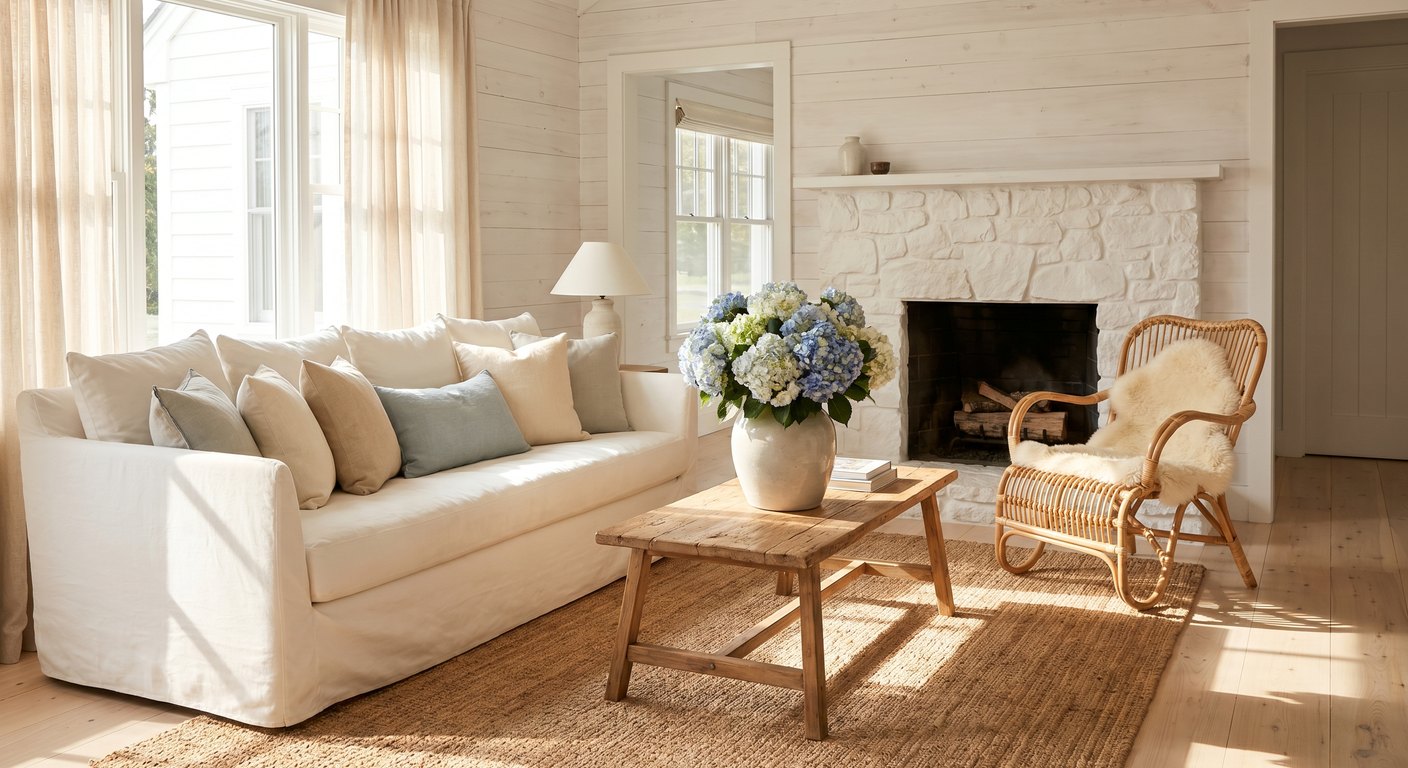
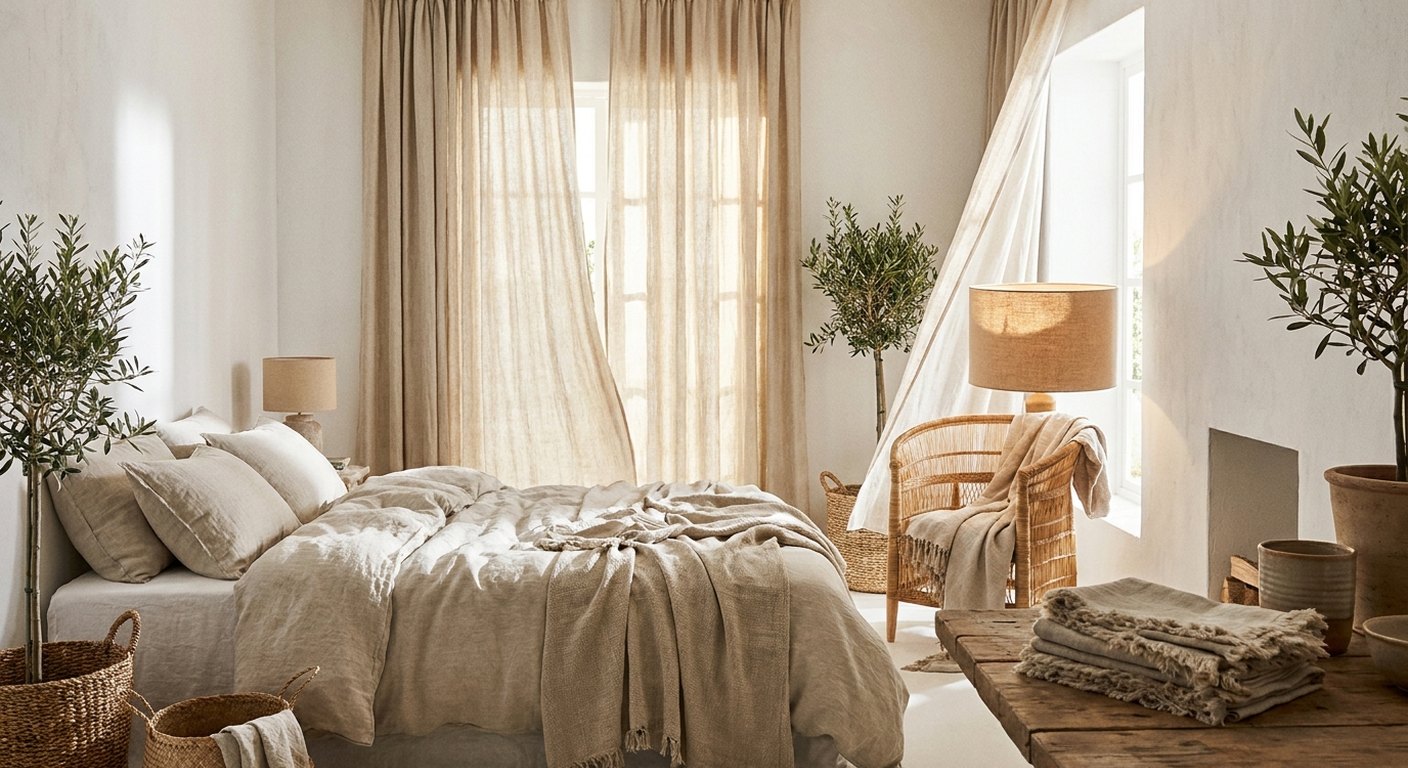
Everyone thinks of linen bedding, but I use it everywhere: curtains that filter the light and move in a breeze, slipcovers that relax a sofa, even lamp shades in linen that cast a soft, warm, diffused glow.
Why Linen Suits Coastal Rooms
Linen earns its central place in coastal interiors through its texture and its honesty. The soft, slightly rumpled hand looks effortless rather than formal, drapes beautifully, and only grows softer with washing. Its matte, organic finish reads warm and lived-in. The gathered-over-time feeling at the heart of coastal grandmother style. And because it comes in exactly the soft neutral tones that define the palette, it's the easiest material to run as a quiet thread through a whole home. No other fabric does relaxed-but-intentional quite as naturally.
It Ties Rooms Together
Because linen comes in those soft warm neutrals, repeating it across a home creates a quiet cohesion. The same oatmeal tone in the bedding, the curtains, and a lampshade makes everything feel connected without matching.
Linen as a Light Diffuser
One underrated use is linen as a shade material. A linen lampshade or a linen-shaded pendant diffuses light into a soft, warm, even glow, gentler than glass, brighter than dense rattan. It's the middle path when you want softness without much visible texture, and it pairs the material story of the room with its lighting story in one move. Linen curtains do the same trick with daylight, filtering harsh sun into a soft wash and adding gentle movement on a breeze.
Caring for Linen
Linen is low-maintenance if you accept its nature. Wash it, shake it out, and let it be a little rumpled. That relaxed texture is the look, so I don't iron bedding or curtains. If you want it smoother, a quick steam or pulling pieces straight while slightly damp helps. It's durable and gets better with age, which makes it a genuine long-term buy rather than a trend purchase. The only people linen doesn't suit are those who need everything crisp.
Is Linen Worth the Price?
Linen costs more upfront than cotton, but it earns it. It's durable, gets softer with every wash, and lasts for years rather than seasons, so the cost per use is low. It also looks intentional even unironed, which saves effort. For the pieces you touch daily, bedding, a lampshade, curtains. That longevity and ease make linen a genuine long-term value, not an indulgence.
Linen Mistakes to Avoid
The errors are mostly expectation: fighting the wrinkles with constant ironing, which misses the point; buying very cheap linen that pills or thins fast; and using it where you want crisp formality, where it'll always feel too relaxed. Let it rumple, buy decent quality, and use it where soft and lived-in is the goal, which, in a coastal home, is nearly everywhere.
Caring for Linen So It Lasts
Linen is low-maintenance if you work with it. Wash on a gentle cycle, skip harsh bleach, and either air-dry or tumble low. A shake-out and a slightly rumpled finish is the look, so don't iron bedding or curtains. Pair it with the warm glow of a soft pendant and it only grows more beautiful with age and use.
Embrace the Wrinkle
Linen wrinkles, and that's the point. The relaxed rumple is a feature, not a flaw. Pair it with the warm glow of a soft pendant and you have the whole coastal grandmother feeling in two simple materials.
Shop this post: table lamps for the living room and pendant lights