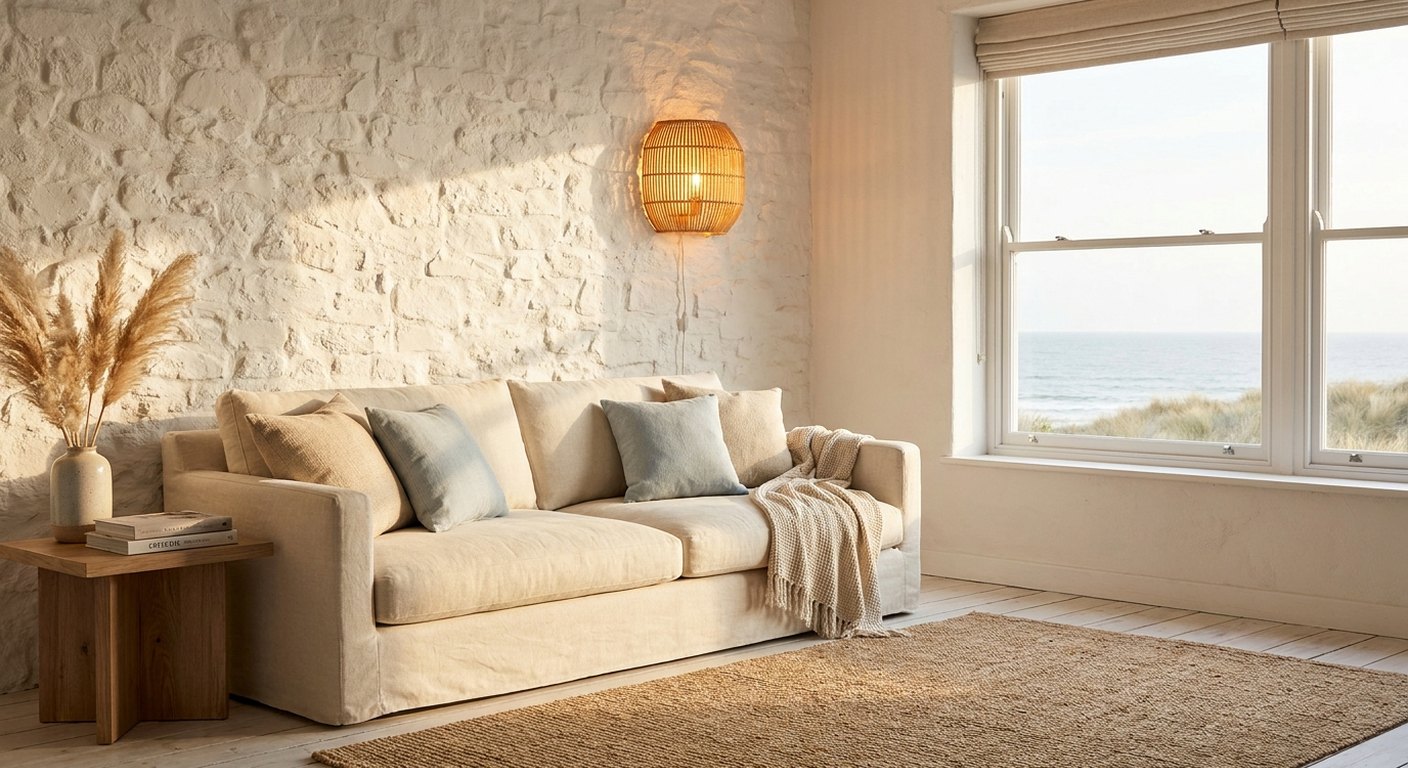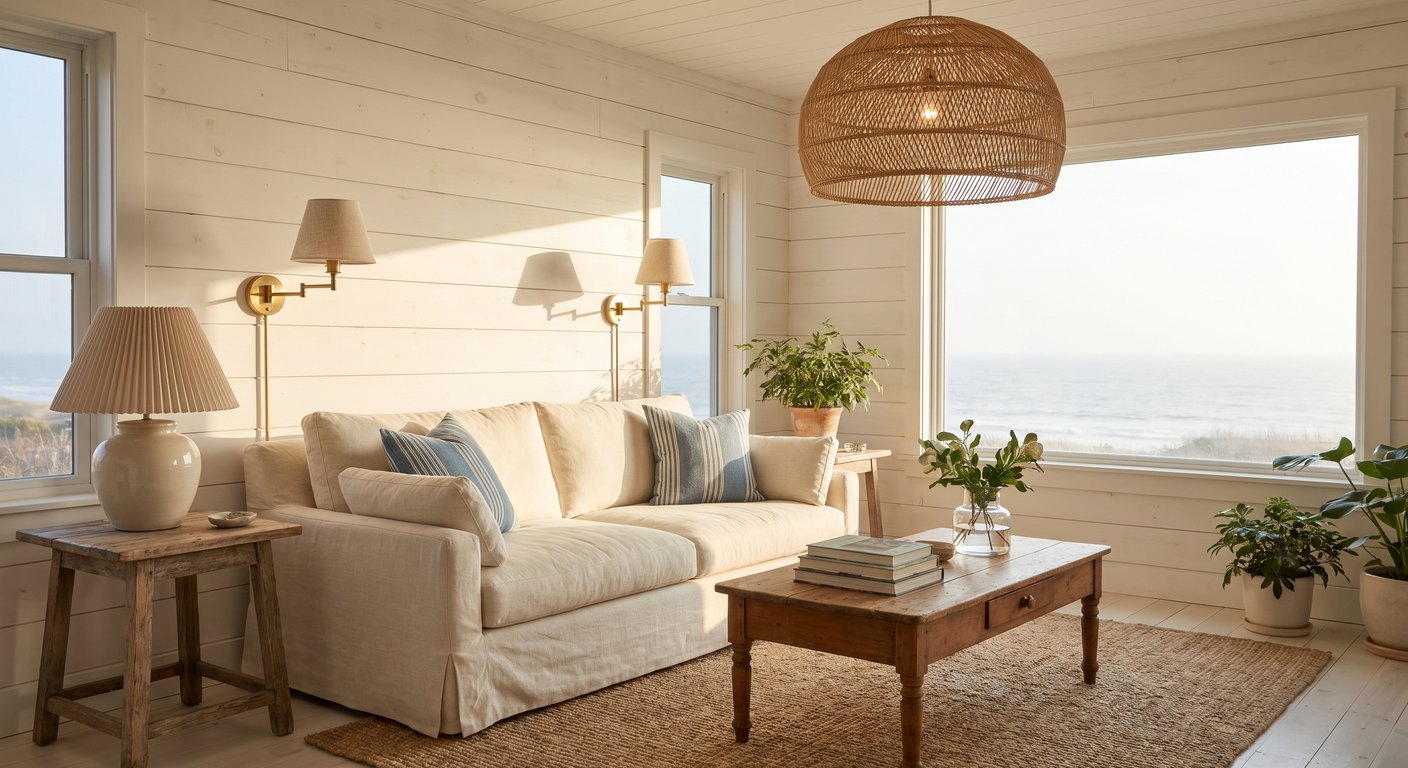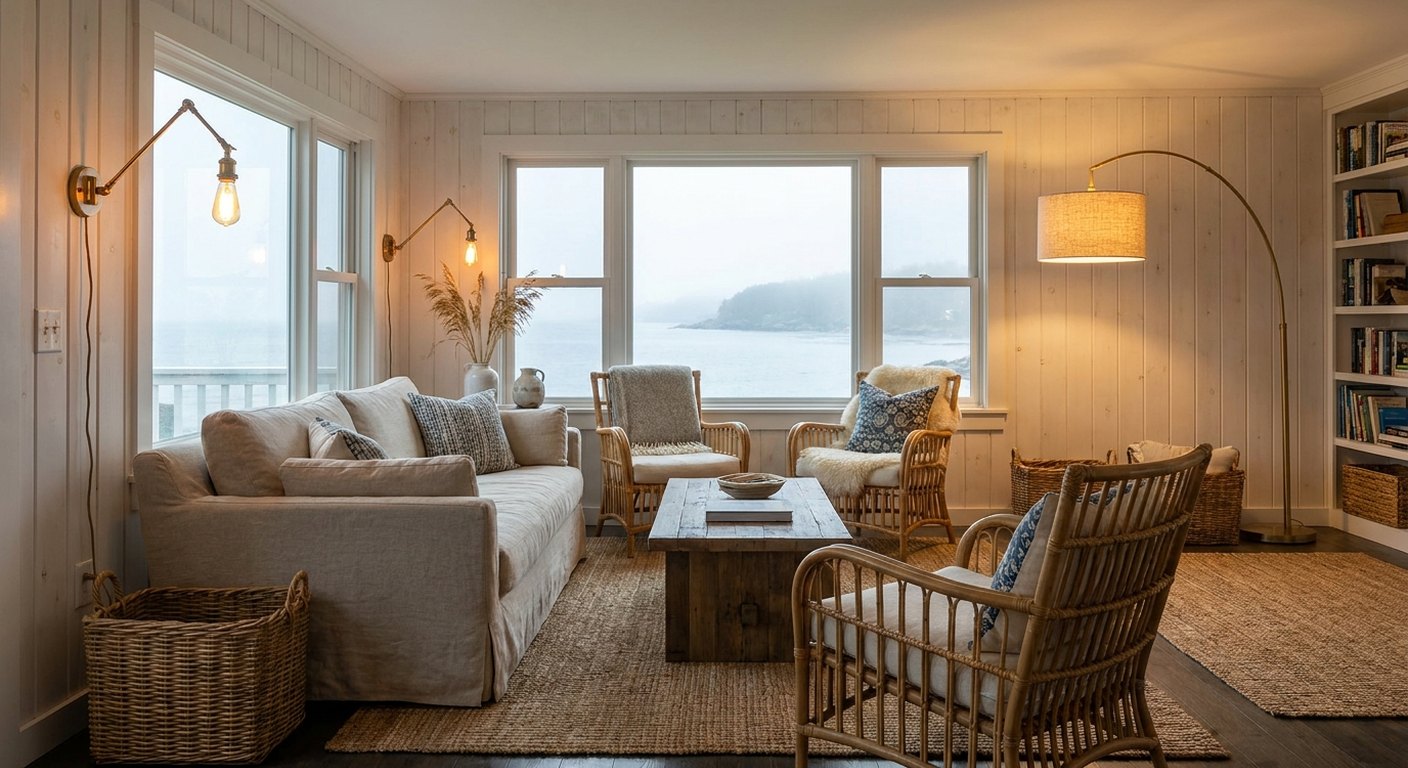
One of our rooms faces north, and north light has a reputation for a reason. It's even and steady, which artists love, but it's also cool and a little flat. The room could feel chilly even on a bright day. Here's how I warmed it up without sacrificing the brightness.
Warm Bulbs Everywhere
First move: every bulb in the room went to 2700K warm white. North daylight is cool, so the artificial light has to add the warmth the sun isn't bringing. This alone shifted the whole feeling of the room from clinical toward cozy.
Layer the Light
A single overhead fixture in a north room is a recipe for flatness. I added two wall sconces at eye level and a floor lamp in the corner. Light at different heights restores the depth and shadow that even north light erases.
Warm Materials Help, Too
Light isn't the only lever. Warm wood tones, rattan, and soft linen textiles all push back against the coolness. Cool grays and stark whites amplify the chill; warm whites and natural textures counter it.
Why North Light Feels Cool
It helps to understand what you're correcting. North-facing rooms get indirect, even daylight with none of the warm, directional sunbeams that south- and west-facing rooms enjoy. That makes north light wonderful for artists and unforgiving for cozy living. It's steady and a little flat, so a room can read cool and even dim when there's actually plenty of light. You're not fighting the amount of light, you're adding the warmth and shadow it lacks.
Warm Bulbs in Every Fixture
The first and cheapest move is to put a warm 2700K bulb in every fixture in the room. Where the daylight is cool, the artificial light has to supply the warmth, so this single change shifts the whole feeling from clinical toward golden. Keep the temperature consistent across sources, and favor high-CRI bulbs so the warm tones read true rather than muddy, the ENERGY STAR guide helps decode the labels.
Layer Light at Different Heights
A single overhead fixture in a north room is a recipe for flatness on top of flatness. Add light at lower heights to rebuild depth: two wall sconces at eye level and a floor lamp in the corner restore the shadow and gradient that cool, even daylight erases. Three or four warm sources at staggered heights make the room feel warm and dimensional even when the windows are doing their flattest work.
Warm Materials and Paint
Light isn't the only lever. Warm wood tones, rattan, and soft linen textiles all push back against the coolness, while cool grays and stark whites amplify it. Even the wall color matters: warm whites and soft, slightly earthy neutrals hold their warmth in north light, whereas cool grays and blue-leaning whites read dingy. If you're choosing paint for a north room, test it on the actual wall, north light will reveal any cool undertone mercilessly.
Mirrors to Bounce the Light
One more trick: a mirror placed to catch and reflect what daylight there is will spread it deeper into the room and make a north-facing space feel brighter without a single added watt. Position it opposite or adjacent to the window. Combined with warm bulbs, layered sources, and warm materials, it's the finishing move that makes a cool room feel inviting.
A North-Room Lighting Recipe
Here's the plan I'd give anyone with a cool, flat north room: warm 2700K high-CRI bulbs in every fixture, three or four sources at staggered heights, warm materials like wood and rattan, a warm-white or soft-neutral paint, and a mirror to bounce the daylight. None of it is expensive, and together they replace exactly what north light lacks, warmth and shadow, without dimming the lovely even brightness the windows give.
Mistakes in a North-Facing Room
People make a cool room colder: they paint it grey or stark white, choose cool bulbs to 'match' the daylight, and rely on one overhead. Each amplifies the chill. Reverse all three, warm paint, warm bulbs, layered sources. And the same room turns inviting. The goal is to counter the cool light, not echo it.
Seasonal Light in a North Room
North light shifts less through the year than other exposures, which is both its gift and its challenge. It's reliably even but never warm. In winter especially, lean harder on the warm artificial layers and add a low lamp in the darkest corner. The fixtures stay the same year-round; you just bring up the warm sources as the daylight thins.
Bright and Warm at Once
The result is a room that's still bright, north light is lovely for that. But no longer cold. Warm bulbs, layered sources, and natural materials gave it the golden quality the windows alone never could.
Shop this post: wall sconces and floor lamps for the living room