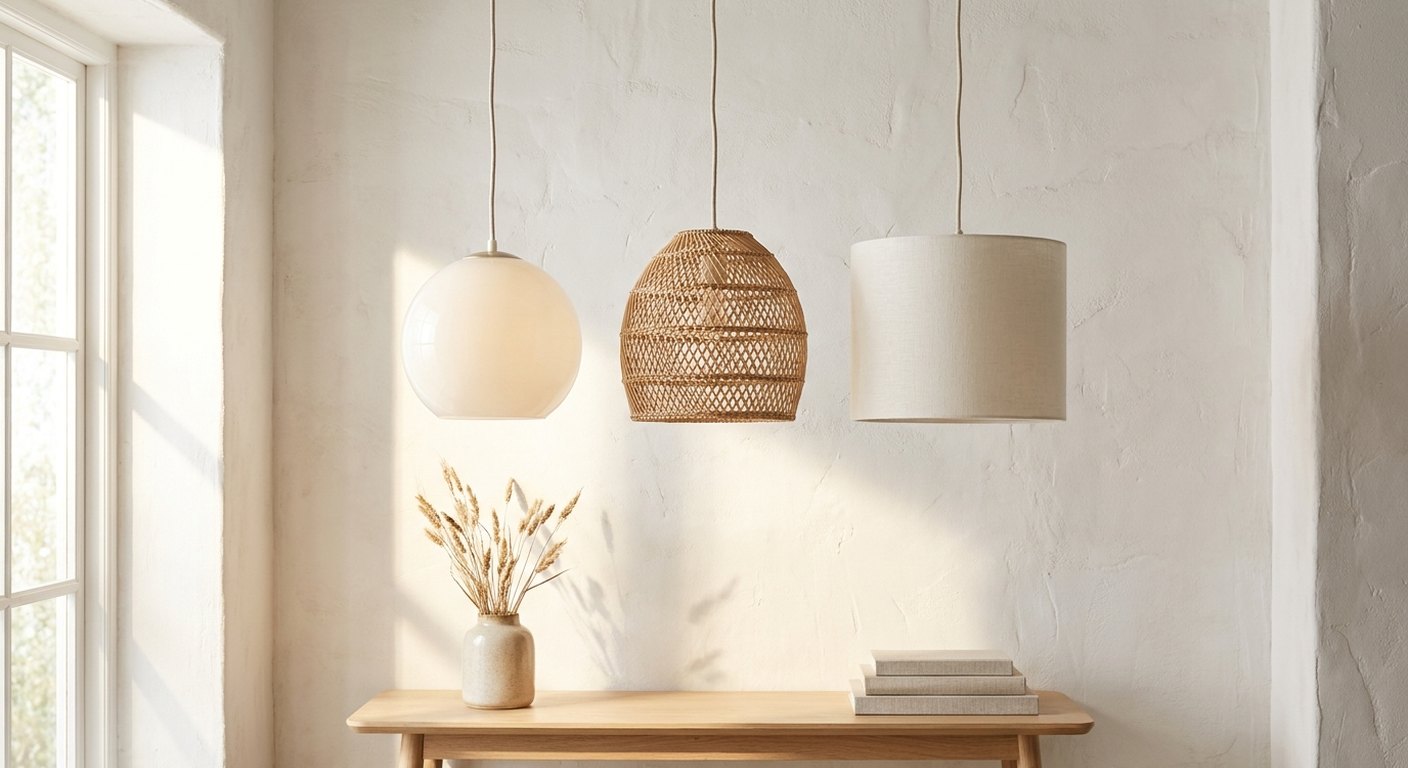
Once you've decided a pendant is coastal, the next question is the shade. A quality linen or rattan pendant shade runs about $80 to $250. Glass, rattan, and linen all belong in a coastal home, but they do completely different things to light. Here's how I choose between them.
Glass: Clean and Glowing
Glass shades give the most usable light. Opal or seeded glass pendants glow evenly and brightly, which makes them ideal over a dining table or in a bedroom where you want a soft but real amount of light. Clear glass shows the bulb, so I lean toward opal for a softer effect.
Rattan: Texture and Mood
Woven rattan and natural shades cast lovely textured shadows and warm ambient glow, but lower output. They're about mood and texture, not brightness. Perfect over an island or in a sunroom, paired with another light source to do the heavy lifting.
Linen: The Soft Middle
Linen and fabric shades diffuse light softly and warmly, landing between glass and rattan. They feel relaxed and coastal and give a pleasant, even glow. Lovely over a dining table or in a bedroom when you want softness without much visible texture.
How Each Material Handles Light
The whole difference between these shades is what they do to the light passing through them. Opal glass diffuses light into a soft, even, all-around glow and gives the most usable brightness; clear glass shows the bulb and throws sharper light. So it wants a decorative or frosted bulb inside. Rattan and woven shades block much of the direct light and scatter the rest into textured shadows, beautiful, but dim. Linen sits in between, softening and warming the light without killing much of it. Knowing this, you can predict how a room will feel before the fixture ever arrives.
Best Rooms for Each Shade
Glass earns its place where you need real light: over a dining table, in a bedroom, anywhere a fixture has to carry the room. Browse the glass options for those spots. Rattan and wood belong where texture and mood matter more than output, over an island with backup task light, in a sunroom, in an entry. Linen suits bedrooms and dining rooms where you want softness without much visible texture. Match material to room and you skip the most common pendant regret.
Cleaning and Upkeep
Each material asks for slightly different care, and that should factor into where you hang it. Glass wipes clean in seconds, which is why it's the easy choice over a kitchen island that isn't directly over a cooktop. Rattan needs a soft brush or a vacuum dusting every few weeks and should stay away from grease and steam. Linen shades can be dusted and spot-cleaned. None of it is demanding, but a woven shade over a range is asking for trouble, keep texture where it stays clean.
Mixing Materials in One Home
You don't have to choose just one across a whole house, and a coastal home is more interesting when you don't. Glass over the dining table, rattan over the island, a linen drum in the bedroom. They read as a coherent collection because they share a soft, natural, restrained sensibility even though the materials differ. The thread that ties them together is the warm bulb inside each and the calm palette around them, not the material itself.
Matching Shade to Room
A quick map: glass over the dining table and in the bedroom where you want clean, real light; rattan or wood over the island and in the sunroom where texture and mood lead; linen where you want soft diffusion without much visible weave. Each reads coastal, so the decision is really about how much light the spot needs and how much texture suits it.
Mistakes When Choosing a Shade
The errors: putting a low-output woven shade where you actually need task light and ending up in the dark; hanging a clear glass shade with a harsh bare bulb that glares; and over-matching every shade in the house to the same material until it feels one-note. Match output to the task, soften clear glass with a frosted bulb, and mix materials across rooms for interest.
Caring for Each Material
Upkeep should factor into where each shade goes. Glass wipes clean in seconds, ideal over a busy island. Rattan needs a soft-brush dusting every few weeks and should stay clear of grease and steam. Linen dusts and spot-cleans. None is demanding, but a woven shade over a range is asking for trouble, keep texture where it stays clean, and the glass where it gets messy.
How I Decide
I ask one question: does this spot need light or atmosphere? Light, I reach for glass. Atmosphere, I reach for rattan. Somewhere in between, linen. Match the material to the job, not just the look, and the room works.
Shop this post: glass pendant lights and wood pendant lights