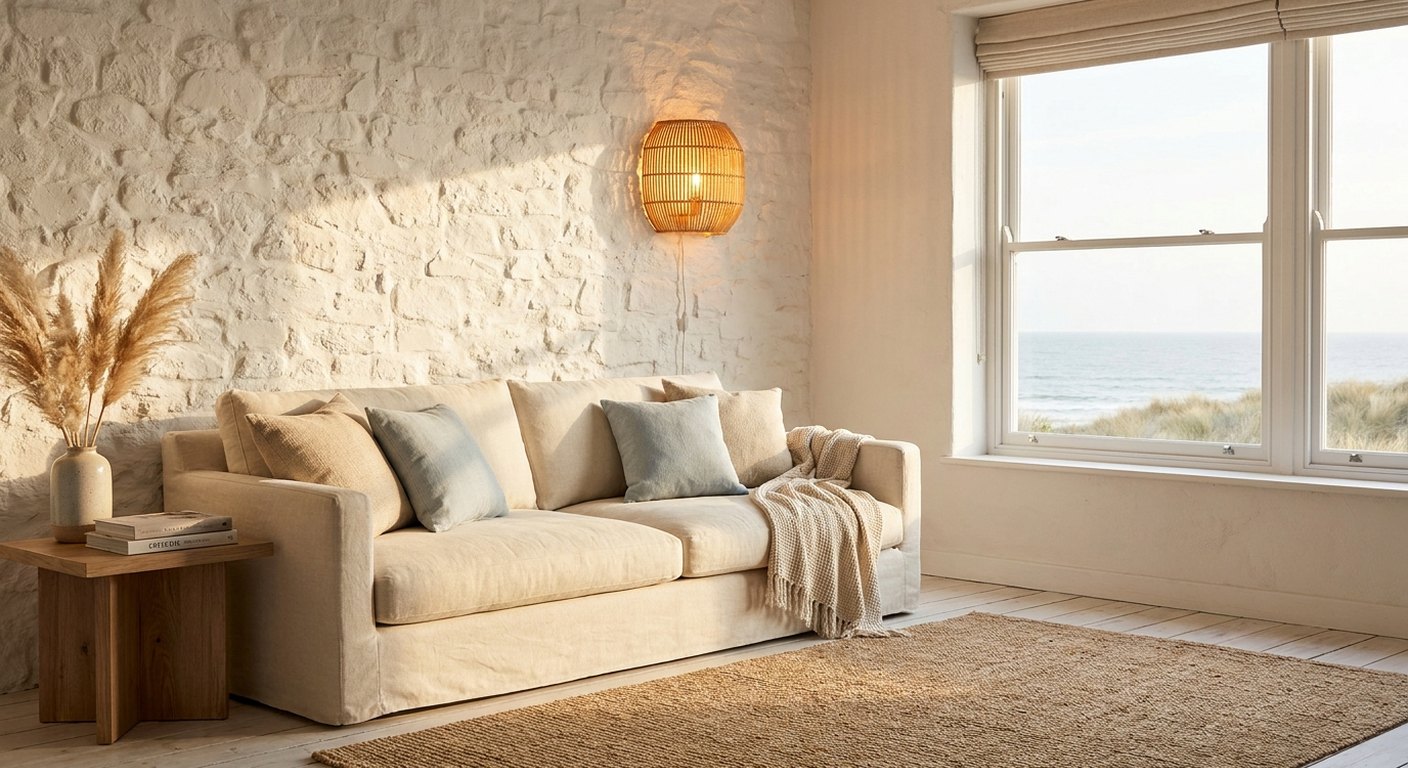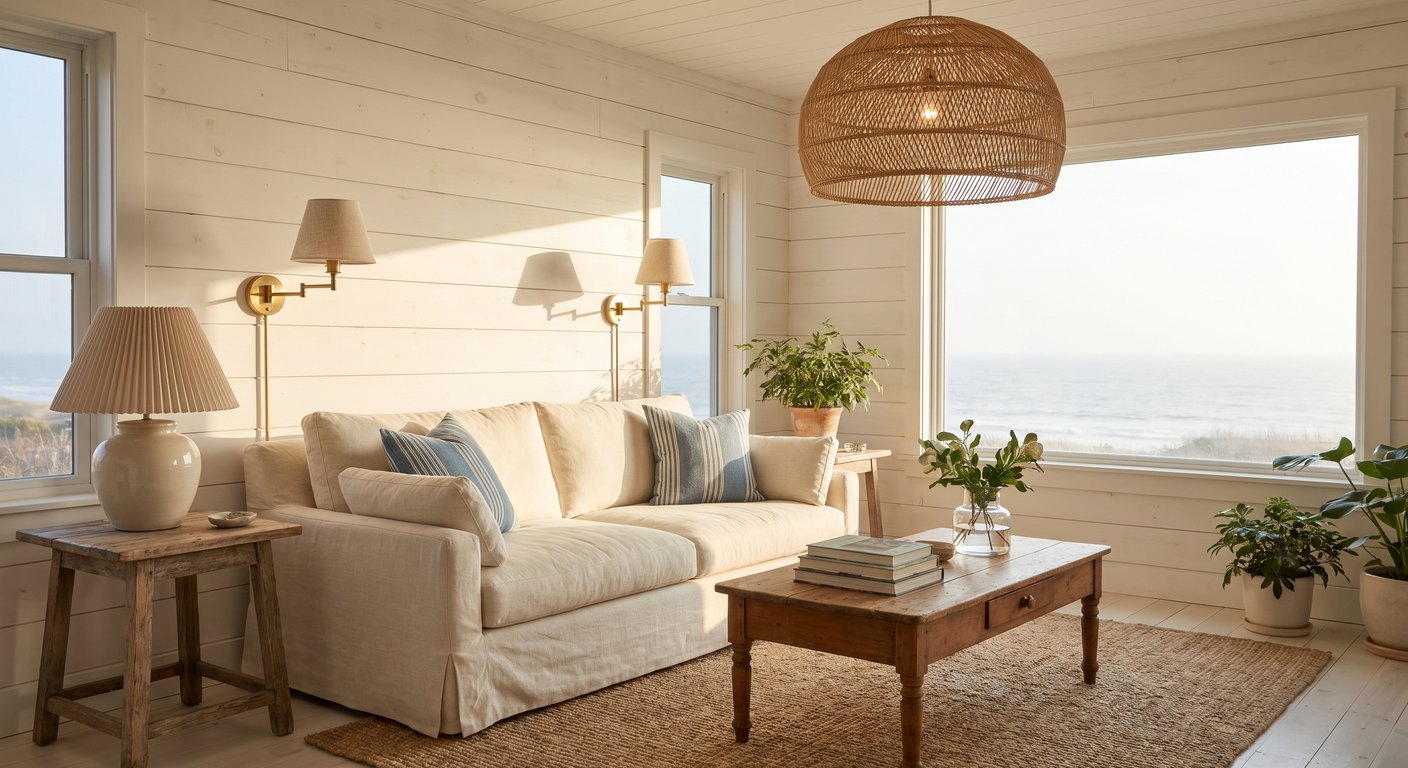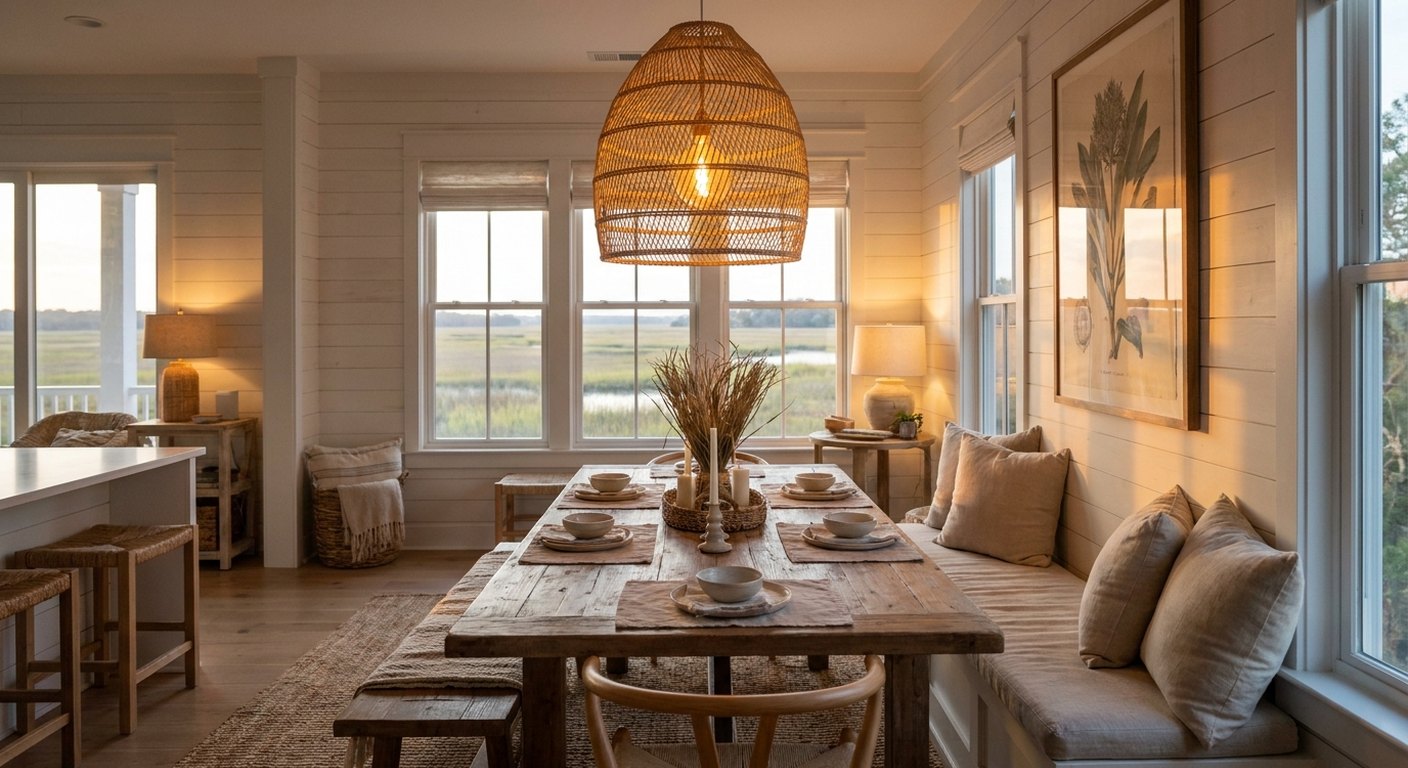
The cheapest luxury you can add to a room costs about twenty dollars and twenty minutes: a dimmer. A basic dimmer switch is about $20, and a smart one runs $40 to $60. I've put one on nearly every light in our house, and I'd do it again in a heartbeat. Here's why it matters so much in a coastal home.
One Fixture, Many Moods
A pendant at full brightness is for tasks. The same pendant at thirty percent is for a slow dinner or a glass of wine on the porch. Without a dimmer you get one setting; with one you get the whole emotional range of a room from a single fixture.
Dimming Makes Warm Light Warmer
Here's the lovely part: dimming a warm bulb makes it glow even warmer and more golden. As the Charleston evening settles in, I bring the lights down and the whole house shifts into that amber, candlelit register that makes you want to stay home.
The Dining Room Especially
If you dim one room, make it the dining room. A bright overhead light is for homework; a dimmed one is for lingering. See my dining room lighting ideas. Every one of them is better on a dimmer.
One Fixture, Many Moods
The reason a dimmer is such a high-value, low-cost upgrade is that it multiplies what a single fixture can do. A pendant at full brightness is for tasks and tidying; at thirty percent it's for a slow dinner or a glass of wine. Without a dimmer you get one setting and one mood; with one you get the whole emotional range of a room from the same fixture. For roughly the price of a nice bulb, it's the best return on investment in home lighting.
Why Dimming Makes Warm Light Warmer
Here's the lovely physics of it: dimming a warm bulb shifts it even warmer and more golden as it goes down, drifting toward candlelight. So as a Charleston evening settles in and I bring the lights down, the whole house slides into an amber, restful register that makes you want to stay home. That warm-dim glow isn't just pretty, softer, warmer evening light is gentler on the body's wind-down, as the Sleep Foundation notes about evening light.
The Rooms That Benefit Most
If you dim selectively, prioritize the rooms you live in at night: the dining room first, then the living room and bedroom. A bright overhead in the dining room is for homework; a dimmed one is for lingering. The bedroom wants a dimmer so you can drop to a low glow before sleep. The kitchen benefits too, bright for cooking, low for the late-night glass of water. Kitchens, dining rooms, and bedrooms are where a dimmer changes daily life most.
Installing One Safely
Swapping a standard single-pole switch for a dimmer is a manageable DIY job for someone comfortable with basic electrical safety: kill the breaker, confirm the power is off with a tester, note the wiring. And connect the dimmer to match. If you have a three-way setup, unusual wiring, or any doubt, hire an electrician. It's inexpensive and never worth risking. Never work on a live circuit, and when in doubt, call a pro.
What Dimmers Cost to Add
A dimmer is one of the best-value upgrades in a home, roughly the price of a nice bulb, plus a few minutes if you're comfortable with basic wiring. For that, a single fixture gains a whole range of moods. Even paying an electrician for a few dimmers is inexpensive relative to how much they change daily life in the rooms you use at night.
Common Dimmer Mistakes
The frequent issues: pairing a non-dimmable LED with a dimmer and getting flicker and buzz; using an old dimmer rated for incandescent loads with modern LEDs; and putting dimmers only in show rooms while leaving the bedroom and kitchen on harsh single settings. Match dimmable bulbs to LED-rated dimmers, and prioritize the rooms you actually relax in.
Smart Dimming Options
Smart dimmer switches and smart bulbs add scheduling and voice control, lights that ease up at dusk and down at bedtime on their own. They're a lovely upgrade for a dining room or bedroom, but they're a convenience layer on top of the basics. A plain dimmer and a warm dimmable bulb already deliver most of the magic.
A Note on Bulbs and Switches
Use bulbs labeled dimmable and a dimmer rated for LEDs, or you'll get flicker and buzz. Match those two things and the dimming is smooth all the way down to a low, beautiful glow.
Shop this post: pendant lights and dining room lighting ideas