Our guest room is small. It was a sewing room in a past life. But I wanted anyone who stayed in it to feel looked after. A good guest room is a quiet act of hospitality, and most of it comes down to thoughtful light and a little restraint.
The Bed Does the Heavy Lifting
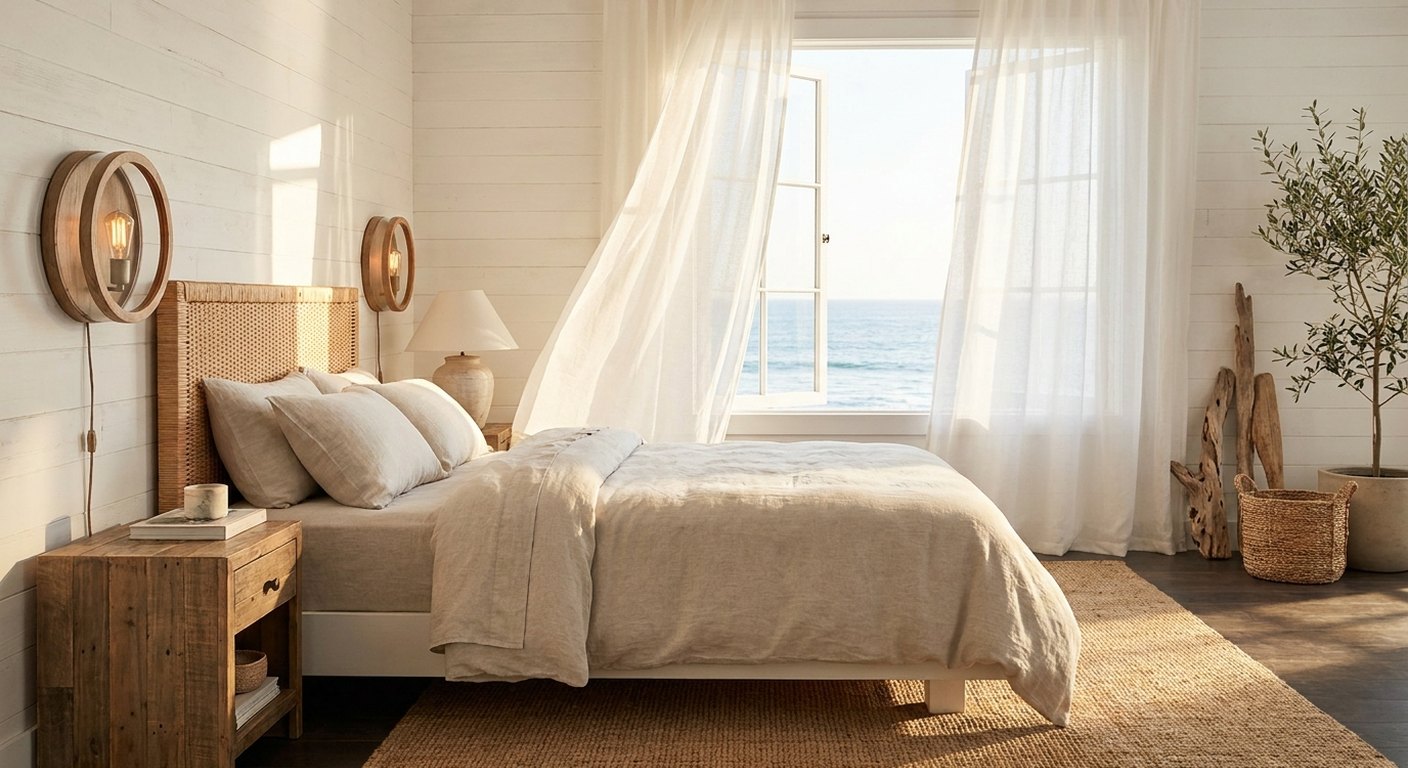
Layered linen bedding in warm white, a lightweight quilt folded at the foot, and more pillows than strictly necessary. It's the bedding equivalent of a firm handshake and a warm welcome.
A Sconce Instead of a Lamp
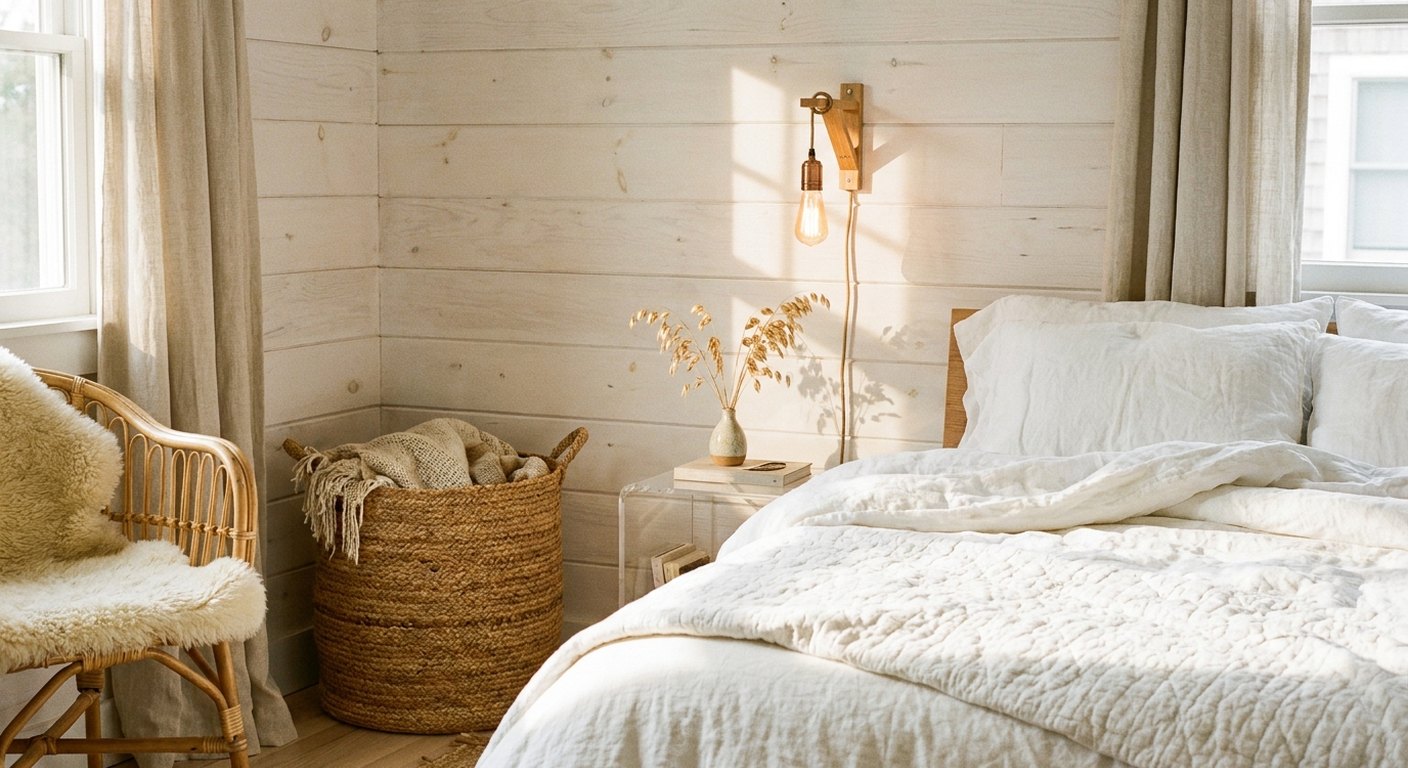
The nightstand is tiny, so a table lamp would have eaten the whole surface. Instead I used a plug-in wall sconce, specifically the Mida wood plug-in sconce, which needed no electrician at all. It mounts to the wall, the cord runs down in a painted cover, and now there's room on the nightstand for a guest's phone and glasses.
The Small Welcomes
A carafe of water and a glass. A few hangers in the closet that aren't wire. A spot to set a suitcase that isn't the floor. None of it is expensive, all of it is the difference between a room and a welcome.
Why a Plug-In Sconce Is the Right Call Here
Guest rooms are almost never wired for bedside sconces, and they're often the last room you'd want to pay an electrician to touch. That's exactly why a plug-in wall sconce is the perfect guest-room solution: it gives you the clean, built-in look of a hardwired fixture with zero electrical work. Mount the bracket, hang the plug-in sconce, run the cord down the wall in a paintable cover, and plug it into the nearest outlet. From the bed it reads as a proper fixture, and your guest gets real reading light instead of fumbling with a lamp switch in an unfamiliar room.
I mounted the Mida wood sconce at about 60 inches, centered over the small nightstand, with the cord run straight down to the baseboard and along to the outlet behind the bed. The wood arm warms up the room's pale palette, and because the cord cover is painted to match the wall, you have to look twice to notice it isn't hardwired.
The Small Comforts Guests Actually Notice
The things that make a guest feel cared for are almost embarrassingly simple, and most cost nothing. A carafe of water and a clean glass on the nightstand. A few real hangers in the closet instead of wire. A folded spare blanket at the foot of the bed for the person who runs cold. A clear surface, which the wall sconce makes possible, to set down a phone and glasses. A luggage rack or a bench so the suitcase isn't on the floor. None of it is expensive; all of it is the difference between a room and a welcome.
Making a Small Room Feel Bigger
Our guest room was a sewing room in a past life, so it's small. And the same coastal restraint that makes any room calm also makes a small one feel larger. Keep the palette light and warm, clear the surfaces, and use wall-mounted light instead of a table lamp to free the nightstand. A mirror on one wall bounces the daylight and visually doubles the space. Pale linen bedding, a single piece of art, and very little else: the emptiness reads as airy, not bare.
Bedding That Does the Heavy Lifting
I spend most of the guest-room budget on the bed, because that's what a guest actually experiences. Layered washed-linen bedding in warm white, a lightweight quilt folded at the foot, and more pillows than strictly necessary make the bed feel generous and hotel-good without feeling fussy. Linen is forgiving. It looks intentional even unironed, which makes it the easiest bedding to keep a guest room ready in.
What I'd Do Differently
I'd have put the sconce in before our first guests rather than after, for the first few months the room had a clumsy lamp crowding the little nightstand. And the swap to a wall sconce instantly made the room feel considered. I'd also keep a small basket of the things guests forget, a toothbrush, a phone charger, a hand cream, stocked permanently rather than scrambling before each visit.
A Guest-Ready Checklist
I keep the room permanently guest-ready with a short mental checklist: clean layered linen bedding, a working bedside light, a clear nightstand surface, water and a glass, real hangers, a spare blanket, and a spot for a suitcase. A small basket of forgotten essentials, toothbrush, charger, hand cream, lives in the closet permanently so there's no scramble before a visit. The list is short because a good guest room is about a few thoughtful basics, not abundance.
What the Room Cost
Almost nothing, because it reused what we had. The splurge was the bedding; the plug-in wood sconce was modest and needed no electrician; the nightstand and a thrifted lamp-free setup did the rest. A guest room is the one room where you can spend the least and still make the biggest impression, because comfort and thoughtfulness read louder than money.
Adapting for Different Guests
A little flexibility goes a long way. The spare blanket serves the guest who runs cold; the dimmable sconce suits the night reader and the early sleeper alike; a clear surface works whether someone travels light or unpacks fully. Designing for the range of people who'll actually stay, rather than one imagined guest, is what makes a room feel hospitable to everyone who uses it.
Why I Keep Stealing It
The honest truth is the room turned out so calm and comfortable that I retreat there to read on quiet afternoons. When you've made a guest room you actually want to sleep in, you know your guests will feel it too.
Shop this post: plug-in wall sconces and the Mida wood plug-in sconce