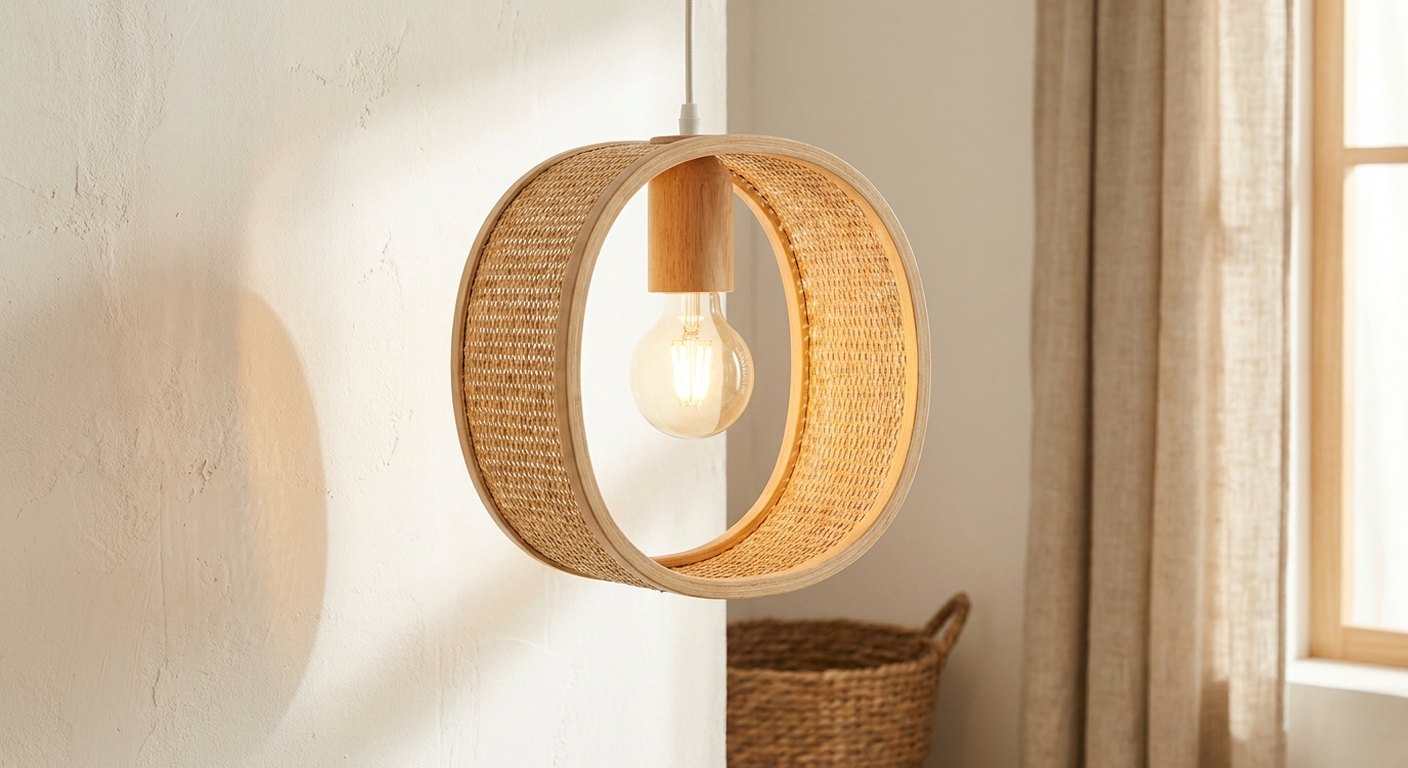
Bulbs are confusing on purpose. The packaging is covered in numbers and acronyms that mean nothing until someone explains them. Here's the plain-English version so your beautiful fixtures actually glow the way you imagined.
Color Temperature (Kelvin)
This is the big one. Lower Kelvin is warmer. For a coastal home, buy 2700K, warm white, almost everywhere. It's the golden, late-afternoon color that makes whites and naturals look soft. Skip anything labeled "daylight" or 5000K in living spaces; it's clinical.
Brightness (Lumens)
Lumens measure brightness. More lumens, more light. But don't chase a single bright bulb, build brightness from several modest sources. A bedside sconce at 400-600 lumens, a few of those around a room, beats one blinding fixture every time.
Base Type
The base is what screws in. The standard medium screw base in the U.S. is E26; the smaller candelabra base is E14. Check your fixture before buying. Many Nordic pendants use a standard E26 base, and often the right bulb is already included in the box, which saves you a guessing game.
CRI: The Number Nobody Mentions
Beyond color temperature and brightness, there's one more number worth knowing: CRI, or color rendering index. It measures how accurately a bulb shows colors, on a scale to 100. A bulb at 90+ CRI makes your whites read white, your woods read warm. And your linens read true; a cheap low-CRI bulb makes the same coastal room look faintly grey and lifeless. It rarely appears on the front of the box, so check the fine print, and favor 90+ for living spaces. The ENERGY STAR guide is a good reference for decoding the full label.
How Many Lumens You Actually Need
Lumens are brightness, and the trick is distributing them rather than concentrating them. A cozy bedside light might be 400 to 600 lumens; a living-room lamp around 800; a bright kitchen fixture 1,000 or more. But a room lit comfortably is one where several modest sources add up, not one where a single bulb blazes. When in doubt, choose a slightly lower-lumen bulb and add a second source, layered light at lower output always feels warmer than one bright fixture.
Matching the Base to the Fixture
The base is the part that screws or plugs in, and getting it wrong means the bulb simply won't fit. The standard medium screw base in the U.S. is E26; the smaller candelabra base is E14. Many Nordic and coastal fixtures use a standard E26 base, and often the right bulb is already included in the box. But always check the fixture's spec before buying replacements. A quick glance at the listing or the old bulb saves a wasted trip.
Shape and Finish
Bulb shape matters most when the bulb is visible, as in an open glass pendant or an exposed-bulb sconce. A soft frosted or opal bulb hides the filament and glows evenly; a clear bulb shows a decorative filament for a vintage look but can glare. In a closed shade, shape barely matters. Match the visibility of the bulb to how finished you want it to look.
How Many Bulbs to Buy at Once
When you find a warm, high-CRI bulb you like, buy in bulk for the room. Bulbs from different batches or brands can vary subtly in tone, and a row of sconces or pendants where one bulb is slightly off is surprisingly noticeable. Stocking a few spares of the same bulb means a burnout never leaves you with a mismatched fixture and a late-night trip to the store.
Common Bulb Mistakes
Most bulb regret comes from three habits: grabbing cool 'daylight' bulbs that make a coastal room look grey, ignoring CRI so colors go dull. And forgetting the dimmable label so an LED buzzes on a dimmer. A fourth is mismatching base sizes. Read the box for 2700K and 90-plus CRI, check 'dimmable,' and confirm the base, four quick checks that prevent nearly every problem.
Smart and Tunable Bulbs
If you want one fixture to serve different moods, a tunable smart bulb shifts color temperature on a schedule, cooler and brighter by day, warm and dim at night. They're worth it in a pendant or office fixture you use across the whole day. For most coastal rooms, though, a plain warm dimmable bulb on a dimmer does the job beautifully at a fraction of the cost.
Dimmable or Not
If there's any chance the fixture goes on a dimmer, buy bulbs labeled dimmable. Non-dimmable LEDs flicker and buzz on a dimmer. I buy dimmable warm bulbs by default, one fixture that can go from bright to candle-low is worth every cent.
Shop this post: pendant lights and wall sconces