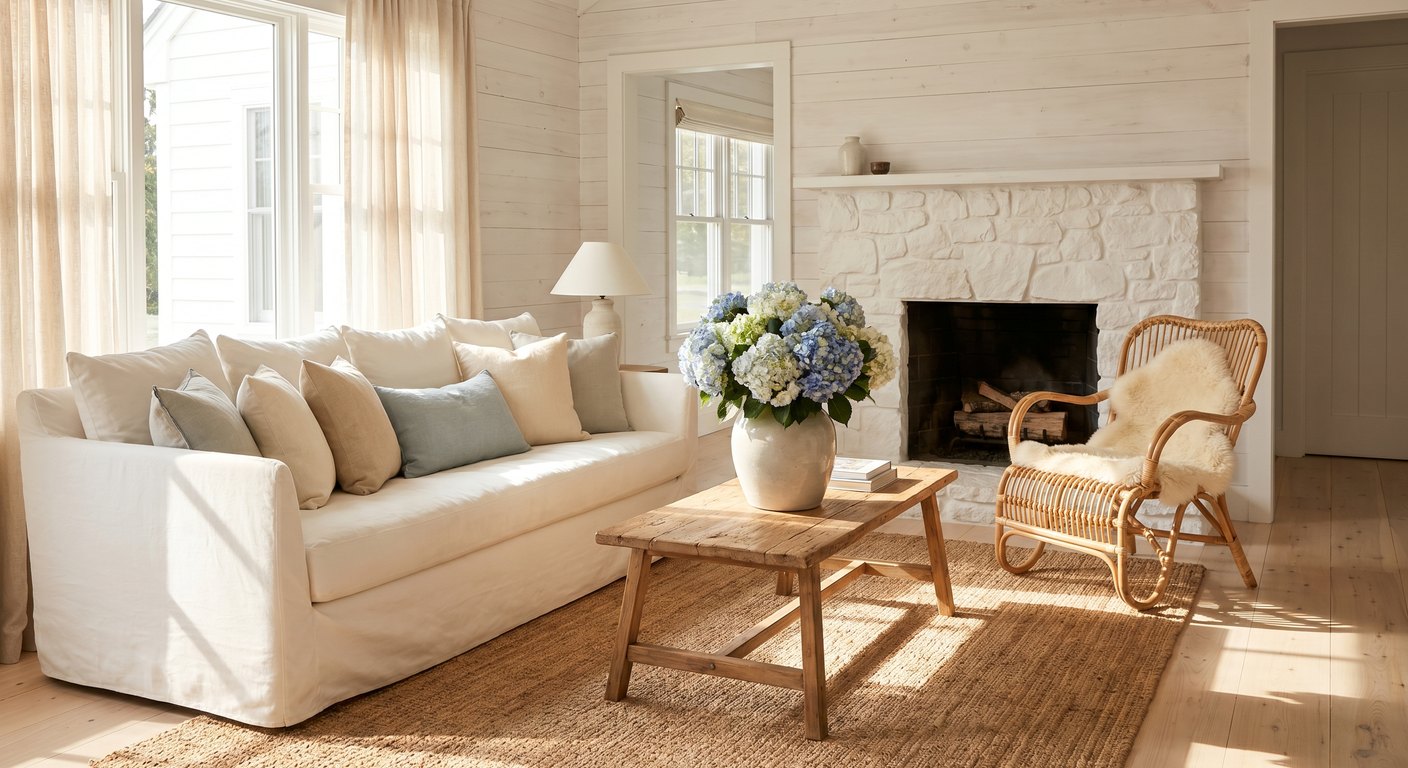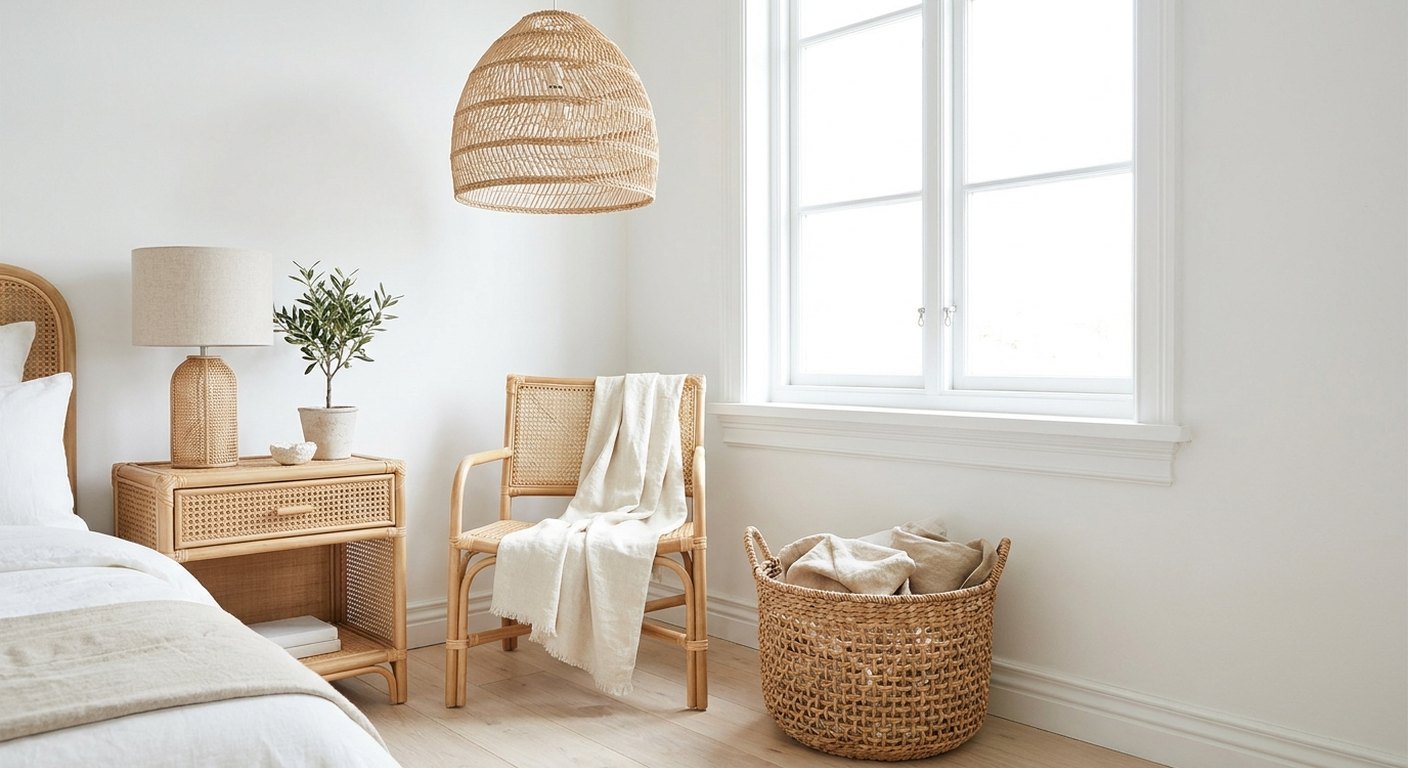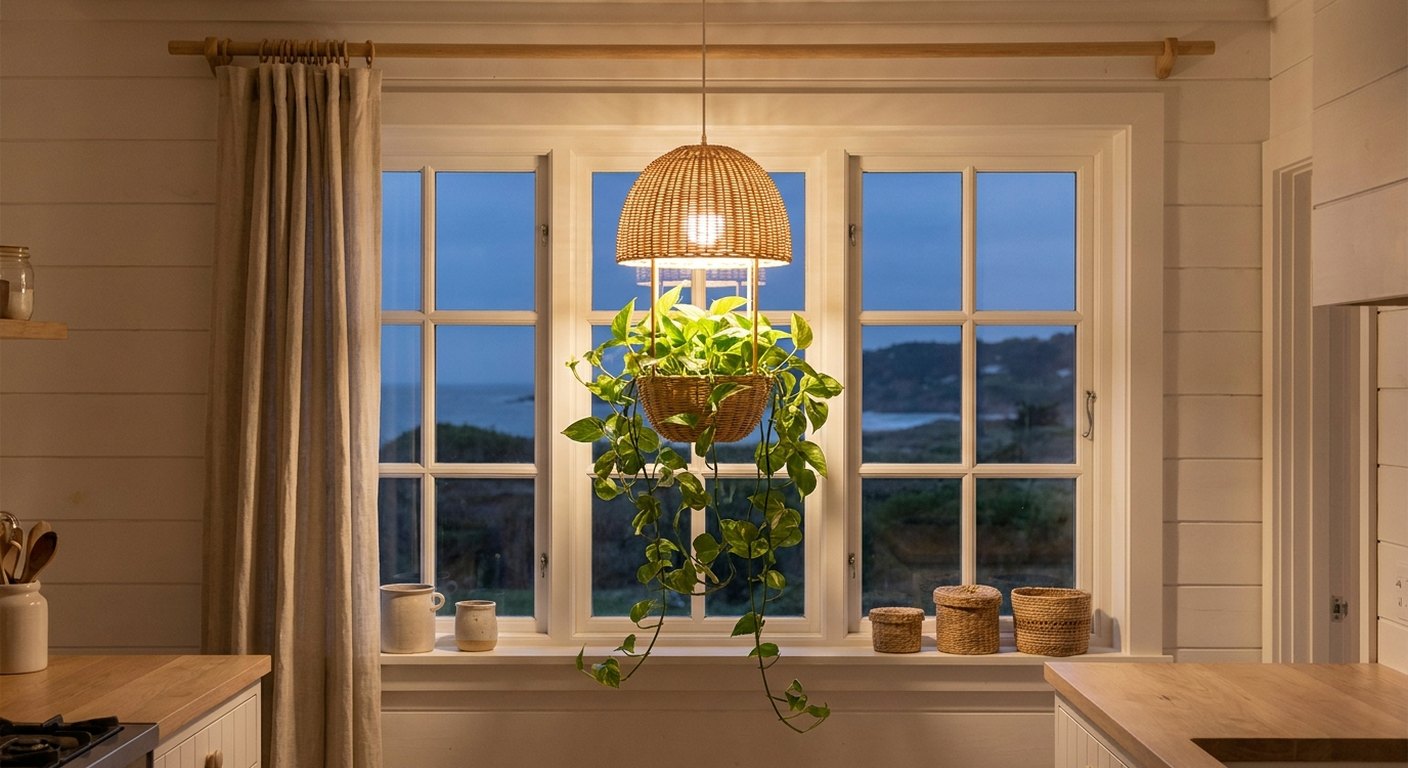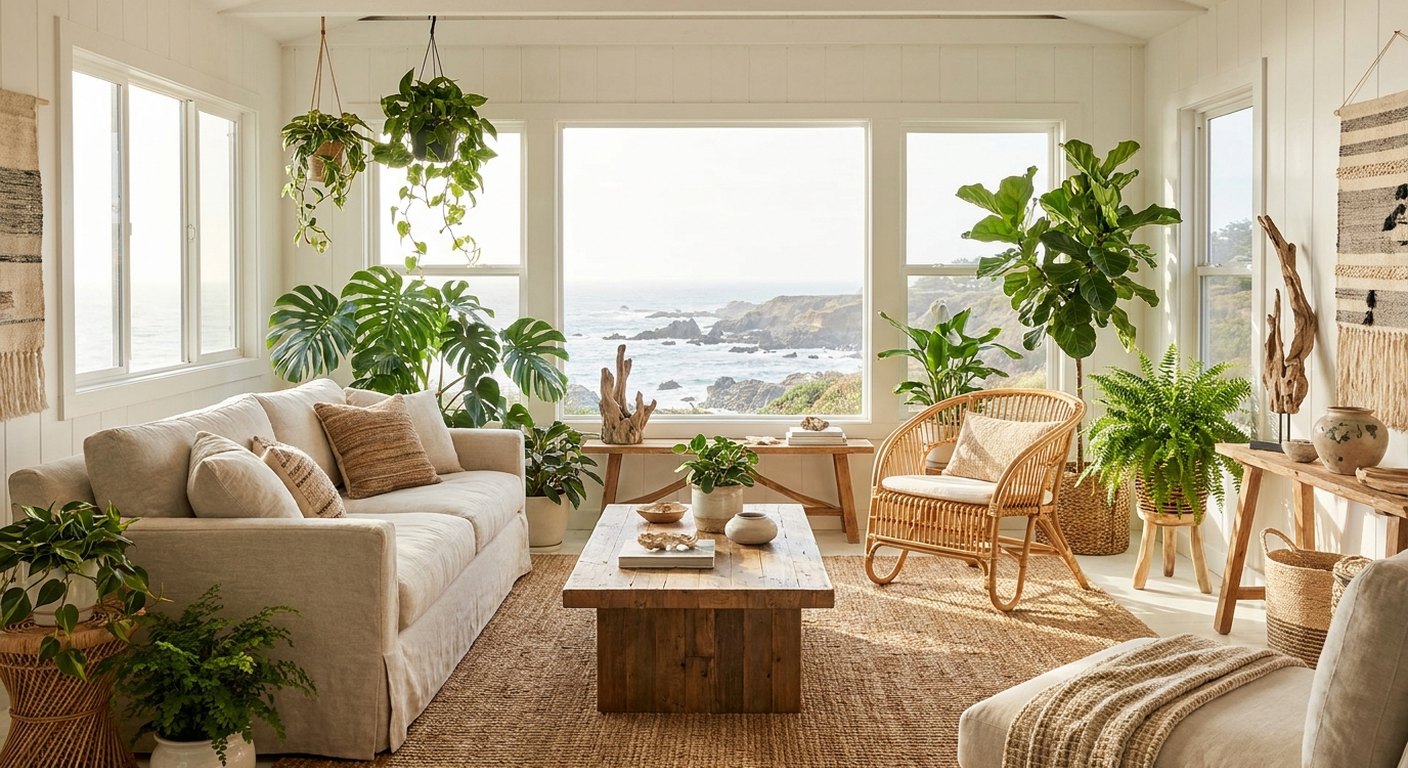
Strip away the rattan and the linen and the warm light, and what coastal style is really about is connection to nature. A few real plants and natural materials cost under $100 and do most of the heavy lifting. That's also the heart of biophilic design. The idea that surrounding ourselves with the natural world makes our homes calmer and more restorative. Here's how I bring the outside in.
Plants, Everywhere They'll Thrive
Greenery is the easiest and most impactful biophilic move. I keep easy-care plants in every room that gets enough light, pothos, ferns, a fiddle-leaf in the bright corner. They soften hard surfaces and make a room feel alive.
Natural Materials
Wood, stone, rattan, linen, jute. Every natural material reinforces that connection to the outdoors. The biophilic design collection is full of pieces built around exactly this idea.
Light and Greenery Together
A wall vase of foraged stems or a planter light merges nature and lighting into one gesture. These little living details do more for the feeling of a room than any amount of decor.
What Biophilic Design Actually Means
Biophilic design is an approach that strengthens our connection to nature inside the built environment. In a home it shows up as natural light, plants and greenery, natural materials like wood and stone, views of the outdoors, nature-inspired colors, and organic shapes. The premise is simple and well-supported: surrounding ourselves with elements of the natural world makes spaces feel calmer and more restorative. For a coastal home, it's less a separate style than the principle underneath everything. The reason all that rattan, linen, and daylight feels so good to be in.
Plants, Where They'll Thrive
Greenery is the easiest, highest-impact biophilic move. Keep easy-care plants in every room that gets enough light, pothos, ferns, a fiddle-leaf in the bright corner. And choose each plant for the room's actual light level so it stays healthy. Plants soften hard surfaces, add organic texture and movement, and make a space feel cared for and alive. Even a few well-placed pots noticeably change how a room feels, and a planter light merges greenery and warm glow into a single gesture.
Natural Materials and Colors
Beyond living plants, the materials and palette carry the biophilic feeling. Wood, stone, rattan, linen, and jute all reinforce the connection to the outdoors, and nature-drawn colors, warm whites, sandy neutrals, soft greens, extend it. The biophilic design collection is built around exactly this idea. Repeating a few natural materials throughout a home, rather than one token wood piece in a sea of synthetics, is what makes the effect feel whole.
Doing It on a Budget
Most biophilic touches are inexpensive or free. Add easy plants, maximize daylight by keeping windows unobstructed, bring in thrifted wood or woven pieces, choose nature-inspired colors, and put fresh or foraged stems in a vase. Rearranging furniture to face a window costs nothing and meaningfully increases the sense of connection to nature. You don't need a renovation. You need light, plants, and natural texture.
Biophilic Touches on Any Budget
Most of this costs little. A few easy plants, a vase of foraged stems, thrifted wood and woven pieces, and furniture turned to face the light all deepen the connection to nature for next to nothing. A planter light merges greenery and glow if you want one purchase that does double duty. The principle scales from a rental windowsill to a whole house.
Common Biophilic Mistakes
The pitfalls: buying plants for looks rather than the room's actual light, then watching them struggle; blocking windows with heavy treatments that cut the daylight; and treating one token wood object as 'natural materials' in a room of synthetics. Choose plants for your light, keep windows clear, and repeat real natural materials so the effect feels whole rather than decorative.
Low-Maintenance Greenery
If you're nervous about plants, start with the forgiving ones, pothos, snake plant, ZZ plant, and many ferns tolerate imperfect care and lower light. Group a few in natural pots for impact, and choose species suited to each spot's light. A handful of healthy, easy plants does more for the biophilic feeling than a dozen struggling fussy ones.
Face the Windows
The simplest biophilic change costs nothing: arrange furniture to face the light and the view. Keep windows unobstructed, let the daylight in, and orient the room toward the outdoors. Connection to nature starts with simply being able to see it.
Shop this post: the biophilic design collection and wall vases and pots