My first attempt at a coastal bedroom had ropes on it. A rope mirror, rope trim on a pillow, an actual piece of driftwood on a shelf. I looked at it after the third rope arrived and thought: this is a problem. Not because any piece was wrong in isolation — but together they were announcing themselves so loudly that I couldn't actually relax in the room. It looked like a theme. Themes are exhausting to live in.
That was in 2021. The bedroom I have now cost less than the first version and looks more like what I had in my head the whole time. Here's what changed.
The Edit That Mattered
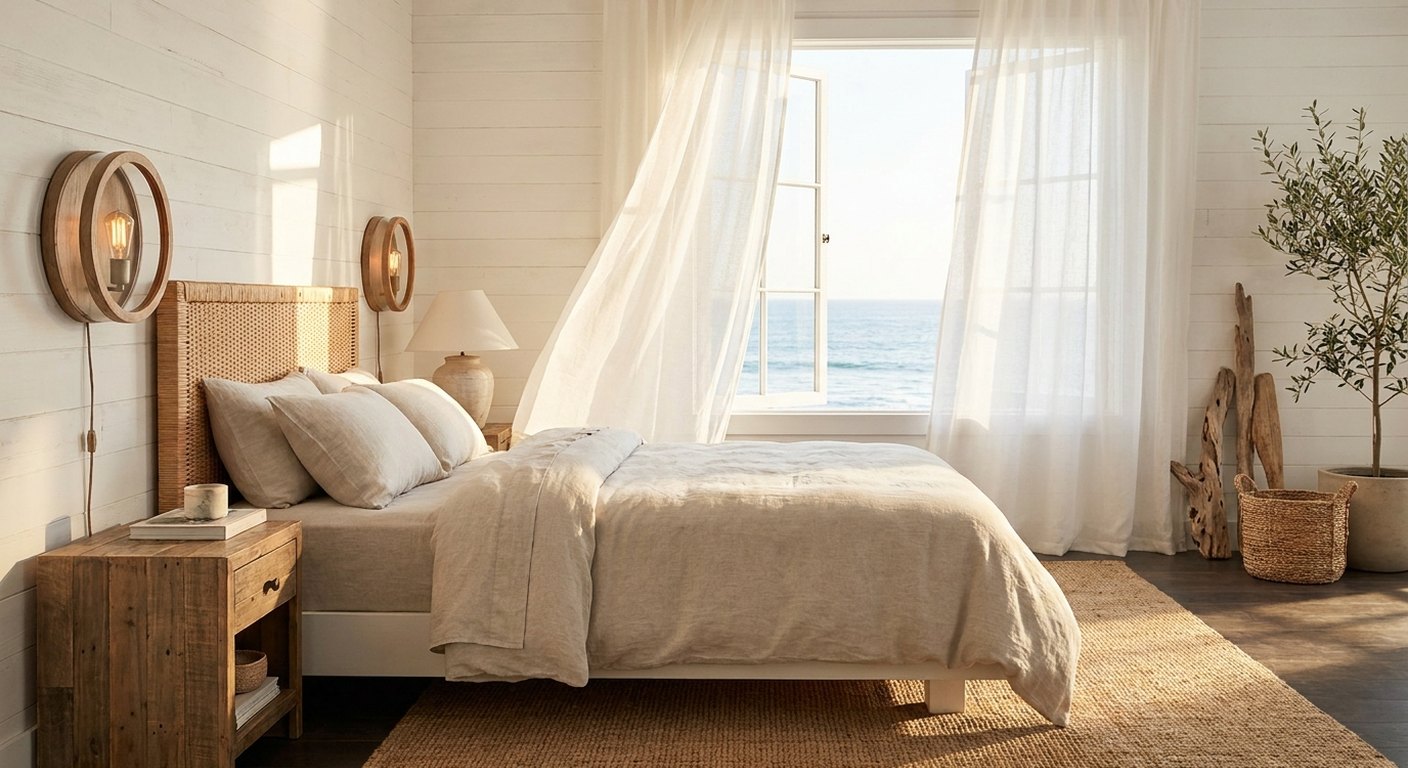
I took out everything that could only exist at the beach. The driftwood. The ropes. A string of glass floats I'd been given. A framed print of a lighthouse. What remained was a room with pale linen curtains, a natural fiber rug, and a bleached wood headboard that I'd had in a previous apartment. That room felt calm. The additional layers I'd been adding were working against it, not with it.
The rule I came to: if you can tell what the room is "about" immediately, it's one step too far. A genuinely comfortable coastal bedroom feels like a place near the ocean — light, airy, a little faded in a nice way — without announcing it.
Color
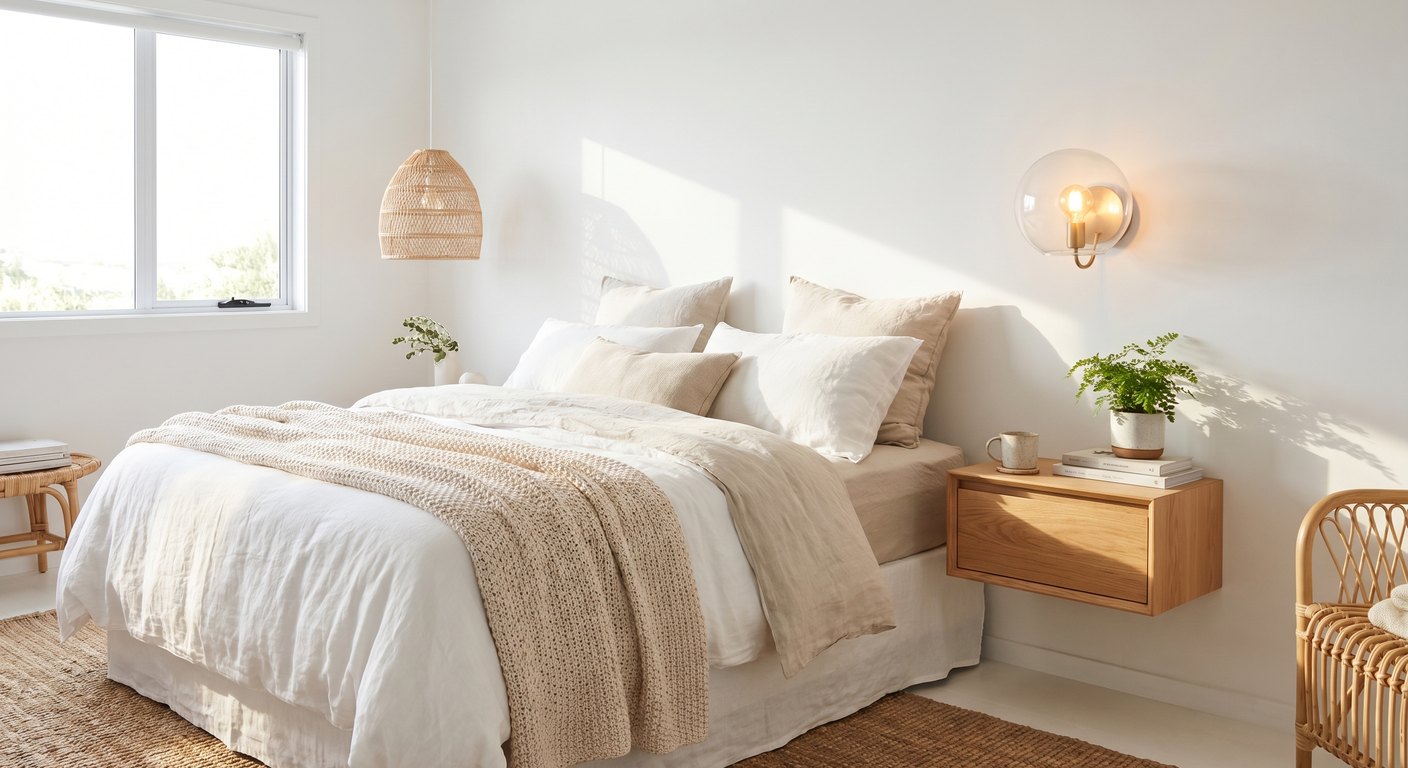
The wall is Benjamin Moore White Dove, which reads as very slightly warm off-white rather than brilliant white. Brilliant white in a bedroom is unforgiving — every shadow reads as cold, and without natural light it can feel institutional. White Dove is softer. The linen duvet cover is a pale dusty blue-gray from a small Belgian linen company, about $340 for a king set. I've had it three years and it's gotten better, not worse, with washing.
For coastal bedrooms specifically, I'd avoid cool grays and stick with warm or neutral tones that read as bleached rather than painted. The distinction matters. Bleached feels sun and time. Painted feels deliberate. The goal, at least for me, is the former.
Lighting Was the Piece I Kept Getting Wrong
I had a central overhead fixture for years because the room came with one and I didn't think much about it. The overhead light was fine for daytime but in the evening it was harsh and unflattering — too much, from the wrong direction. I switched to two wall sconces flanking the headboard in 2023 and the room changed completely.
The sconces are from BO-HA — a simple cream ceramic base with a fabric shade, E26, 2700K bulb. About $85 each. I wrote more thoroughly about this specific choice in my post on why bedside sconces are the upgrade I recommend most, but the short version: warm light at eye level is what makes a bedroom feel like a refuge rather than a room. The coastal theme has nothing to do with it. It's just good lighting.
The overhead fixture is still in the room and I use it occasionally during the day. In the evening, it stays off.
The Rest of It
Natural fiber rug. Two nightstands that are plain wood, not painted, not decorated. A very small amount of greenery — one plant in a simple terra cotta pot. No artwork in the bedroom at all, which felt radical to me but which I now think is right. A bedroom is for sleeping. It doesn't need to do anything except feel comfortable.
The original coastal bedroom post I wrote goes into more detail about the full room layout and the rug dimensions. This one is specifically about the editing — taking out more than you think you should, and then taking out a little more.
The Belgian linen I use ships to the US and runs about $320 to $380 for a king duvet set. It's the most-washed thing in the house and it's held up better than anything else.